
A New Year and a Surging Pandemic…

…of media manipulation and gaslighting. I know: it’s what they do. They do it all year, in every season. They don’t seem to have one special holiday of adoration to their Lord Satan (oh, come on! It’s a joke…kind of. Who is the father of lies?). But, heavens, the doozies I’ve seen in the last twenty-four hours! They must feel they need to ring in the New Year loudly y con fuerza.

Does anyone else find the gaslighting frustrating? I do. And it’s not merely gaslighting. It’s double-speak. It’s spin. It’s speculation treated as fact. All of that could be considered gaslighting, if it flies in the face of the reality people are actually experiencing. No matter what you call it, it falls under the umbrella of deceit.

Last night, I found myself chuckling when I read a headline calling night sweats a “very strange” symptom of Omicron. The media does like to engage in “much ado about nothing,” except they’ve been using Covid to push a fear narrative for over two years now, and it’s no longer funny. So, I’m not sure why I was chuckling. I guess absurdity still strikes my funny bone. If they don’t have anything else, it will be oh no, night sweats. At least I know it’s nothing to worry about if that’s all they can come up with.

Later, I read what I thought would be an informative article about blood type and Rh factor and whether they play a role in fighting Covid. But I gave up when this particular “science” article speculated that the reason countries without as much access to medical care have fared better with Covid was their underreporting of deaths and positive cases. Okay, I can see that as perhaps part of the problem. Or part of the solution, as I don’t believe our tests or our death statistics are even remotely accurate. I have many, many reasons for doubting them…which would take me another article to write about. Another frustrated rant. Another B-girl fest. I’m very good at the last in the list, if nothing else.

On the other hand, I believe that we’ve had far, far too many Covid deaths due to our access to medical care. Speaking of gaslighting, we in wealthy westernized nations have been told that preventive care is fake news and anti-science this entire pandemic. People who suggest preventive care, in fact, are silenced on social media and have been throughout. This has left those who get very sick with no recourse but to go the hospital and have tubes jammed down their throat when the cytokine storm happens, which it will for a certain percentage of the population. By that time, it’s too late, sorry. You’re much more likely to die after having had a tube jammed down your airway. Meanwhile, the people in poor countries who have little access to hospitals have been forced to rely on “unscientific” preventive medicine. Magically, they’ve fared better. I mean, it can’t be attributed to science, so it must be magic.

And then there were the cherry articles, all the drama over Omicron. Omg (if you say that long form, it sounds like Omicron but is also probably blasphemous, so…) everyone is getting sick because it’s so infectious. Now society is going to shut down from sick people unless you go out and get the vaccine, except please forget that part of the labor shortage is due to vaccine mandates for essential and nonessential workers alike. Many workers walked away at the mandates. Of course, that’s not to mention that there was already a labor shortage because, after having time off due to Covid shutdowns, some workers realized they didn’t want to be treated like garbage for low pay anymore. The employees that are left are the vaccinated hardcore. And they are the ones getting sick! Irony upon irony abounds. No matter how the media spins their emotional manipulation, I end up scratching my head. Our media and government overlords, I’ve determined, will not be happy until everyone gets Trump’s shots (another irony) and is reliant on the multitude of boosters because they are sick and stupid and can no longer buy groceries because the labor shortages could not be warded away with the vaccine charms. Not that the overlords ever desired our good.

Welcome to 2022! Welcome to continued shutdowns and panics over colds and viruses we used to live with as a normal course of things! I’m at the point that I wish we didn’t have freedom of the press, so these idiot journalists couldn’t go around spouting their nonsense. Oh, wait, we don’t have freedom of the press. That’s why preventive medicine is fake news and anti-science.

Sorry, friends. I really want 2022 to be the best year yet, but so far, I find myself engaged in one long mental face palm.
Joy, Joy, Joy

That title is meant to be sung on a scale with ever-ascending key changes. I love to listen to Handel’s Messiah at this time of year. Outside of Mexican music, it’s difficult to pique my interest unless I hear my old favorites, Vivaldi and Handel. Handel was terrible to his vocalists, though. The rumor goes he once threw a soprano out a window, but historical rumors are the result of the real-life version of the game telephone. The actual story is quite a bit different than the rumor. What is true is Handel’s obtuseness towards humans and their pitch limitations. It’s difficult to find a soprano who can sing all parts in The Messiah. The ones who can are rare creatures, probably with a touch of the other-wordly in their souls.*

What is joy? I asked this question some time ago. I don’t think it’s wearing an undying smile, like Will Farrell in Elf, albeit, the restoration of childlike joy is the theme of that film. I know that film is incredibly goofy, but it really is about joy. The perpetual smile is simply Farrell’s discomforting manner of passing along the message. Think about it: in elfland, the people dwell with Santa. They have no reason not to believe in his existence and, therefore, they are constantly joyful. Back in the “real” world of men, people lack both faith and joy. I had concluded these two intangibles were interconnected in a post several months ago. Funny how a silly Hollywood film came to that conclusion years ago.

It’s no secret humans get caught up in the kind of pursuits that will never bring them joy. They — or we rather — are about boosting our egos, rescuing our egos, or just getting along to get along. It makes life such a drag. But you know what isn’t a drag? Appreciating the small moments given to us by God and acknowledging his presence in our lives. I’m visiting my sister and there is snow outside the window: beautiful gifts from God. She went to midnight Mass with me and, speaking of vocalists, the church had a lovely choir singing Christmas carols the entire half hour before midnight. That, too, was a beautiful gift from God, brought to me from people who have faith in him. Or, one hopes they have faith. One assumes church goers do, but there’s no guarantee. Sometimes people just keep doing these things they assume will bring them joy.

Appreciating beauty and small moments with each other and with nature is not outside the worldview of secularists, regardless of whether they choose to go to church. In fact, there is a push for gratefulness in humanism. They seem to grasp the necessity for a karmic expression of what goes around, comes around. If we express our gratitude to the universe, as it were, we will find more goodness in the future. This becomes hope, and hope is intertwined with faith. One hopes it is. But…there is always a but.

On Christmas Eve, we drove around neighborhoods looking at lights. There was an entire neighborhood in Tigard that had come together to decorate their houses. The houses were secular: those that attempted a religious perspective either put up rainbow signs with love wins or the generic believe. My youngest niece, who is twenty and tired of empty platitudes, demanded to know what that meant: “Believe in what?” she asked. “Everything has been debunked.” Colorful lights are lovely, a spot of beauty, but platitudes do nothing for the soul.

Humanism is an empty conceit at a certain point. Even secularists’ gratefulness turns weary and pales. What do they actually have to believe in, aside from reforming all humans into a utopic vision? And then what? Faith and joy may be interconnected, but the faith has to be in something real, something outside an overarching belief in humanity and our own wretched imitation of love. Love wins. Sure it does, when it is self-sacrificial and doesn’t consider its own life and ego to be of utmost importance. It wins when we acknowledge that encouraging people in their selfish, sinful desires is not good for them. It is not, in fact, loving to spin oneself into death and decay with self-congratulatory back pats. Love wins when it is real, and when it concedes that man did not create itself. Sorry, but I cannot believe in humanity. Not ultimately. Sometimes they will surprise you with their pursuit of goodness, but all that does is demonstrate they were created in the image of a good God who also gave them the ability to choose Him.

If there’s one message I want to pass along it’s that God has not yet been debunked. It is impossible to debunk God. It hasn’t happened, and it won’t happen. That is the message both young and old people need to hear. They need to hear that their lives matter because they were divinely created, and their creator committed a self-sacrificial act to save them from themselves. That kind of faith brings lasting joy. And it’s intangible enough and yet logical enough that when men are given this message, they respond. Not always positively…but that is why joy is so precious.

*So, what is the real story of Handel throwing a soprano out the window? It is worth looking up — it’s an intriguing historical tale. It had nothing to do with her inability to sing the high notes. Rather, he threatened to throw her out the window because this particular “ethereal” being acted like an ego-driven prima donna. Oh, well. Let’s hope she found joy in the end.

Currently Reading and Writing: a Post Which Falls Headlong into Philosophy

In my post the other day about dissatisfying books, I forgot to mention that The Red Queen was a book I’d originally purchased for my son, as he’d joined a book club at school. The book pushed him quickly out of the club, and I read it only so my money wouldn’t be wasted. I must say I’m a little irritated. If the club had picked a better book, my son might still be in it. However, after reading it, I can certainly sympathize with him. I only bring this up to highlight the state of the YA industry. Our nation is currently post-literate, and YA books are more likely to be written by young, illiterate writers with their pretentions extending to the heights of The Hunger Games or Harry Potter.

I did what I usually do when frustrated by low-quality art and thinking; I dropped fiction for nonfiction. Currently, I’m reading a book called Rethinking Mary. I can’t give an opinion on it yet, but I appreciate the premise thus far. The book’s goal is to examine Marian beliefs, not by applying external logic, but by applying internal logic and historical context. That is, it’s an examination of how historical Christians extrapolated their beliefs from the logic of Scripture. I bought a few other books, such as the All Creatures Great and Small series, but I haven’t yet cracked them. I started with the Marian book because it’s Advent and Christmas is later this week. This is my Christmas book of the year.

And as the year is coming to an end, I’m taking a break from writing. It wasn’t intended. It happened because I had too much other work and major life changes occurring. I will start again in January. It’s a good time to assess what I have completed, writing wise. First of all, after sitting on the completed Order of the PenTriagon for a year, I formatted it for print and ebook and published it. I also finished my breakdancing cyberpunk book, though I’m still editing it. Its working title is Breaking Lo Bueno or Breakin’ Good…. Yeah, I know. It’s a play off Breaking Bad because it takes place in Albuquerque and is about breakdancing. Don’t hate me. I’m sure I’ll change the title before I publish.

I was about 70,000 words into my Gothic romance ghost story before I decided I shouldn’t be doing such delightful pleasure writing when I had a sequel to write for Order of the PenTriagon. Unfortunately, I’m only about 30,000 words into the sequel, but I have high hopes of finishing it in a couple of months. Neither of these latter books have working titles, unless you consider OotP Part 2 and Ghost Story to be proper titles.

That’s about it, then. I found some books to read that will carry me through the holidays, and my writing continues despite any tangible reason for it to do so. This sentiment just reminded me that I’ve been playing Caminos de la Vida on the accordion lately, and it’s a sad, sad song about how the paths we end up taking in this life aren’t exactly what we imagine when we’re young and still filled with dreams. There is a specific context to the song, having to do with the arduous work impoverished single mothers face. But it has a broader philosophical appeal, as all humans suffer disappointments and face unexpected and unwanted trials.

It’s true, you know. We dream when we’re young, and I honestly can say it’s a blessing we can’t see into the future. If we could, would we still struggle toward our goals? I don’t know; I really don’t. But that’s because I can only see yesterday’s future, which is known as the present. The future-future is still unknowable to me. You see, I might as well keep going with my struggles. That’s what it means to have faith and to believe that God provides everything we truly need, even if los caminos de la vida no son como yo pensaba….imaginaba….creía. The song uses all the words: the paths of life aren’t what I thought, imagined, or believed.

What Is It About Birds?

My favorite songs are about birds. They are a convenient poetic device, I guess, due to behavior patterns like migration and characteristics like their wings, their feathers, and their hollow bones. Oh, and they sing, too. That’s not to mention that my favorite songs are in Spanish, and even the ordinary sounds intriguing in a second language.

My favorite song for years has been Ramón Ayala’s rendition of Mi Golondrina, a song about a swallow that comes and goes, and the narrator isn’t quite sure if she’ll return. It’s the song I keep singing, while wondering if my own swallow will return — that is, poetry. I used to write poems. I know it’s asking a lot of a song to contain my longing for the intangible … but that’s exactly what good songs do.

Another is El Coyote’s Amor Pajarito. This one is a sad song about a little bird heart that is always getting entrapped. There’s something enchanting to me about a little bird heart. I suppose my bird heart is trapped in his singing. I really do love El Coyote’s voice; sometimes I listen to an 180-song playlist someone compiled on YouTube. The combination of bright brass instruments, emotive vocals and a little bird is the triangulation of perfection. The perfect song. La canción de canciones.

Back to Maestro Ramón, he has a rather dark song called Gaviota. It’s a song about a man whose love is a seagull who has flown away across the ocean. Because he doesn’t have wings as she does and can’t follow her, he decides that if he finds her by the sea, he will clip her wings to keep her with him. I’m not sure that kind of love works out well, but the song is lovely and contemplative nonetheless. I’ve always liked the sound of this: para qué, para qué si no hay por qué. But there always will be a why. She’ll always ask why, and she won’t understand.

There is, of course, the requisite song about a lovelorn man who wants to save the Ave Cautiva like that above. I refer to a song by Conjunto Primavera. The sad part is he will be no more successful at rescuing his love than the man who wants to keep his love by force. Well, I suppose miracles always happen, but people trapped in abusive relationships are often addicted to their cages and won’t leave even if the door is left open.

I could go on and on. I thought of a song about a Paloma Blanca (White Dove), and one about a little dove (El Palomito) with incredible accordion parts, and another called Quisiera Ser Pajarillo (I Want to be a Little Bird). Actually, that latter one has really pretty lyrics. And I do want to be a bird. In the same manner as the above songs, Psalm 55:6 makes me wistful: And I said, Oh that I had wings like a dove! for then would I fly away, and be at rest. Or, because this post has a Spanish theme: Y dije: ¡Quién me diese alas como de paloma! Volaría yo, y descansaría.

Birds leave; birds return and bring olive branches. They soar with wings outstretched. And they sing. Don’t forget that. And if they don’t find the nest they once abandoned, they build a new one. Maybe that’s what it’s all about for me: buscando un nido.

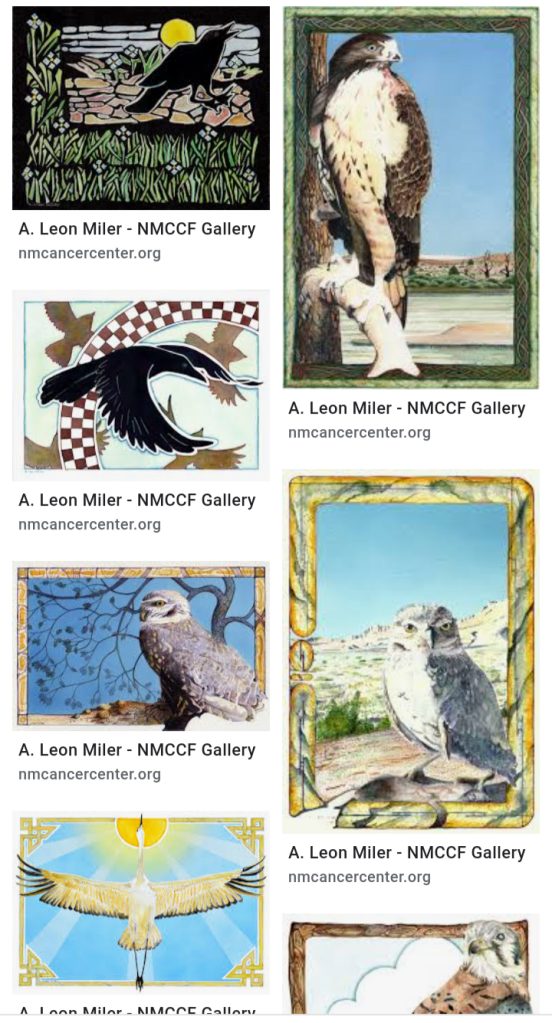
It just occurred to me that my dad also loves birds. This is what I could capture on a screenshot, but it barely scratches the surface on his bird images:

Comparing Books I’ve Been Reading

Comparison is cruel, isn’t it? And yet, I’m going to do it anyway. If you know me at all by now, you know I read any type of literature, high or low. I have what’s known medically as a reading addiction. Yes, I made that up, but being that almost every personality quirk can become a diagnosis, I wouldn’t be surprised if that were a thing. We only really hear about these diagnoses when they become trendy or reach wide swaths of the population. For example, Asperger’s and ADD are still quite trendy, though I believe they reached a peak around five or ten years ago. Anxiety isn’t trendy, but it has consumed so much of the population that we read and hear about it all the time. While I tend to be skeptical of the frequency of Asperger’s and ADD diagnoses, especially for adults, I don’t doubt that people suffer from anxiety. And, to be honest, it doesn’t sound like much fun. I am rarely anxious, but like any human, I have my bouts…and they are physically painful. Anxiety hurts way down in the gut.

Bad literature, on the other hand, hurts in the head. Every book I’ve read lately I would mark as bad literature, even though I’ve liked at least two of the authors in the past. Without further ado, I will tell you about the last three books I’ve read.

  1. Marc Levy’s Hope. Genre: sci fi light. Marc Levy is a French author, whose works are translated into English. Normally, this doesn’t cause me any problems. I like his style because he is light, whimsical, and good at characterization. Also, he always incorporates some manner of sci fi or supernatural elements. His first book, If Only It Were True, was made into a film I loved for all the reasons I listed above. The book Hope was just a slog to get through, despite its fascinating premise of a supercomputer capturing human consciousness. Of course, that’s been done before, but I thought Marc Levy would bring a new spin on it. Did he? Sure. But it was so infernally slow, and I usually don’t mind slow, ponderous books. I also felt the translation was awkward, which didn’t help.
  2. Harlan Coben’s The Boy From the Woods. Genre: mystery/suspense. I’ve raved in the past about Harlan Coben’s ability to be suspenseful, fast-paced, and yet not throw characterization and setting ambience by the wayside. This book was all right, as far as all that goes. I read it in a few hours — not all at one time, mind you, as I normally only read before bed. But I blew through it, unlike the book above, which took me over a month to read. But it was entirely unsatisfying. It felt phoned-in, and that’s not even touching on the Mary Sue nature of the elderly female protagonist. She was far too perfect and intelligent in every way. I wanted to like her; I really did. The male protagonist was a stereotype, too, a version of Reed from Criminal Minds. Not that he was a copy of Reed, per se. More to the point, the Reed-like character is plucked out for use in mysteries far too often, and that actor just happens to have a physically impeccable embodiment of the personality. Oh, and there were a couple of pages that were probably from an unedited version of the book. I usually only see that in self-published novels because the authors are trying to do too much and can often only afford one editing pass. I don’t know how it got through the editor at his publisher, but alas, nobody’s perfect.
  3. Victoria Aveyard’s The Red Queen. Genre: YA fantasy/sci fi. I’m calling this fantasy/sci fi because it ultimately comes down to characters controlling elements of the earth in a very magical way that would, um, normally kill humans. In this case, the people have been altered by evolutionary necessity after the fall of modern civilizations, hence the “sci fi”. It’s not a bad book. It’s enjoyable and mostly fast-paced, but it doesn’t feel unique at all. I can’t make that same claim of Levy above — all his books have an air of uniqueness, even the slog. And Aveyard’s the writing is mediocre to bad. There are some grammar errors that drive my mind down an OCD correction loop (no, I don’t have that trendy diagnosis either). It wouldn’t have been difficult or awkward to fix these errors; somebody either didn’t know enough to fix them or didn’t care. I doubt I will read any more books by this author. I mean, she looks young. There is hope for her, I guess. I just want something more!! I’m in desperate need for the kind of book that surprises me or makes me stare at the ceiling after the last page because I can’t move until I process the perfect ending, the lingering satisfaction a little while longer.

That’s it — the three books I’ve read in the past couple of months. The first book pushed it to that lengthy time. I’d like to cleanse the palate a little with an amazing book before the New Year. I don’t know what that might be, though. If you have any suggestions, please put them below. I might just go back to Chesterton’s nonfiction wit. He’s a sure bet. Or Emily Organ. She’s a modern author that tweaks my funny bone in the way P.G. Wodehouse always has. Perhaps it’s not great literature, but that remains to be seen. P.G. Wodehouse’s books have stood the test of time, even if a good many follow the same formula and are entirely predictable. It’s the humor whose steady light will never die.

Religion or Relationship?

We’ve been attending a non-denominational church as a family. I think it’s good for us to worship together on a Sunday, but I’m not sure how long it will last. My husband doesn’t like church services, any of them, and I will always prefer the Catholic liturgical services. This does not bode well for longevity anywhere. But our kids are almost grown and gone — two already are, and the other two are on their way. We only have a few short years left to go to church with the almost-adults still left in our care.

The pastor at the church we’ve been attending is hung up on the idea of not being religious, not worshipping by rote. I find this a strange sentiment for a pastor; after all, his church meets at codified times and follows an ordered service before ending in an altar call and prescriptive prayer. By “prescriptive,” I mean it is word-for-word the same every week.

Protestants often pit religion against relationship, but the very idea of Christianity as a religion involves a relationship with God through his son Jesus. There is no division between these two ideals; they are simply trying to mesh the tangible with the intangible. This is admittedly difficult, but I can guarantee you it will not be achieved without some manner of rote practice. If you want to encounter the divine, you have to show up for the experience even when you don’t feel inspired to do so. Showing up in a codified manner for Jesus will naturally lead to a good life habit.

I’ve said before that living a life filled with good habits is ultimately rewarding. Sometimes writing is dull. Sometimes I don’t want to exercise or study my languages or play my accordion. But when I show up for the daily practice, I am rewarded by my accomplishments. I finish books and learn new songs and new vocabulary. How much more will a rote daily practice of prayer and Bible reading do for me?

There are habits upon habits that can be formed in life. I once wrote about my first confession in the Catholic church. Confession itself is a rote religious practice — I’m certain this Protestant pastor would eschew it, even though I’ve heard him preach about accountability in the Christian life. Accountability has been coded into the Catholic model, and as mortifying as it is to admit your sins to your pastor of all people — on a regular basis! — it does incredible work for the soul.

But that first confession was a bit odd. The thing about rote religious practice is that it is a religious practice. And when we show up to meet God, which is the basis of why humans practice religion, he will surprise us. He will shake us up, change us. (No, I don’t consider all religions the same, except that they are all about humans seeking the divine. If I didn’t believe Christianity was the one, true religion and path to the divine, I wouldn’t practice it at all.) So, I was both surprised and not surprised during that first confession to find an unfamiliar, elderly priest who listened to my faith crisis, and then told me to talk to Jesus. He said it was a necessary practice. He then reiterated this message about regularly talking to Jesus in the Saturday Mass.

I will always remember that first confession because it wasn’t what I thought it was going to be like. I didn’t expect the advice he gave me. And frankly, I was moved by it. It was so simple and yet so right. It was what I needed to hear. Of course, I obeyed. I went straight to the perpetual adoration chapel and talked to Jesus.

Did you catch the name of the chapel? Catholics have those because they aren’t afraid of rote religion. Rote religion is what sustains them. Remember, this is the oldest version of the Christian church around. (I’m not going to get in arguments with EOs right now; they both have a claim. I’ll just leave it at that.) They might have figured some things out in all those centuries, e.g. that showing up for God is necessary to be a Christian. It is a good habit, a right practice.

Do you know what happens when you don’t develop good habits? Yes, you do, but just in case you forgot: bad habits. Some bad habits will just get us in tight corners with our jobs or destroy our physical health. But those sin habits — they can destroy our relationship with God.

The answer, then, to my title is yes. I want both. I want both from the core of my being.

A Compilation of Busy Thoughts

It’s no secret that fall is the busiest season of the year. It “starts” in August and takes a slow dive into the middle of winter. When January sets in, the world calms down. There is time to sit and stare at a crackling fire and listen to … oh, you know, whatever gets the heart pounding again (but, yes, it’s probably going to have accordion and/or brass). What is it the Bible says in Ezekiel? He will replace our hearts of stone with hearts of flesh. That seems to be an ongoing process in life — chipping away at the heart of stone to reveal the flesh hidden inside.

Because I have extra busy-ness going on in my life right now, I can’t focus on blogging. That’s why I decided to write a post with my varied thoughts. I almost wrote “random thoughts,” but I refuse to misuse the term “random” as so many youngsters do. Is there anything that occurs in the universe that is truly random? That’s a philosophical question. For believers in God, the answer is most likely no. My thoughts are especially not random, as they are brought on by personal circumstances, plus the input of news and books. They might be unfocused and scattered (monkey mind), but random they are not. Even subconscious thoughts in the form of dreaming are not precisely random.

So, what are these thoughts, apart from being thoughts about minds and feelings about hearts? First of all, I’ve been thinking and even dreaming about the shed I’ve cleared out in the backyard. The shed came with this house we purchased a couple of years ago, and it’s a decent-sized space, already wired for electricity and containing a window and two skylights. I should’ve said, “It’s a decent-sized space now that I’ve gutted it of junk.” For the last two years, it has housed odds and ends we don’t use, such as castaway furniture. It also contained a number of items when we moved in that we left there — a few “random” drawers and shelves and a pile of lumber. This space will soon be my office. It will only require a space heater for the winter. In its current position, it’s in near-constant shade from overhanging trees and thus maintains a reasonable temperature in the summer. I doubt I will do much to it but sweep and mop really well, maybe hang some twinkly lights to make it cheery. I’m not interested in decorating. Joanna Gaines I am not. Thank the good Lord above, as I’m stunned that anyone with such bad taste in home decor gets TV shows and advertising gigs. But being the snob that I am, I don’t understand the love of blandness and mediocrity. I’d prefer to live in a nun’s cell and listen to only Gregorian chants echoing around its bare chamber than…. Sorry, but even these thoughts are not random, albeit I had no intention of discussing Hobby Lobby styling.

Now, to get down to brass tacks where the rubber meets the road (which is one of my favorite mixed metaphors), I had set out to write an eminently quotable quote on how a society that upholds justice becomes steadily more just, while a society that tries to enforce equality by demanding a lack of justice for all becomes, well, less just. But I just couldn’t find a snappy way of expressing it. Maybe I need to work on it a little more. That was obviously brought on by current events.

Ay, current events. Some of you know that in about 2017, I started to write my Roswell alien story, which comes complete with a peaceful apocalypse and forced inoculations for an alien virus that had ravaged the population of the world. But, see, my imagination of an apocalypse could never have imagined the current reality, in which we are continuing to shut down economies and borders over Covid variants. Let’s put this in layman’s terms: Covid viruses are cold viruses. That is what we’re shutting down over. Cold viruses. It’s become almost laughable now that the choosers of such things are using idiotic terms like “omicron.” Everything the media and official government and international entities are saying is so ludicrous it’s laughable. They are satirizing themselves. I used to consider myself, if not a comedian, at least a humorous person. But if I can’t even compete with Yahoo News, I don’t stand much chance at winning this gig.

However, my writing does not rely on humor, per se. And that’s where I think I’ll leave this post: with a review of Order of the PenTriagon from Jay DiNitto. This is what he has to say about my youthful heroes, Talat and Robert. You can read the rest of the review here.

Jill got the aforementioned two protagonists right: YA writers, or folks who write books with young adults as protagonists, add too many adult qualities to them, or give them abilities that only specially trained adults would have, in an otherwise semi-realistic situation. Talat and Robert spend most of the story length running from danger (the frequency of that scenario is actually mentioned late in the book), and untying and retying the information they get. …this is how young adults act, not like millionaire Navy SEALS. This is probably the book’s strongest element, and I hope it continues into the second part.

Eminently readable!

Jay DiNitto