Nobody Cares About My Political Opinions Part I

And yet, sometimes I’m going to tell you, anyway. In general, I’m conservative. I wouldn’t call myself progressive. Progressives are soul-crushers. They crush anything of value. They call evil good and good evil. This is a known reality. Conservatives tend to value goodness more than progressives do. Thus, I align more closely with conservatives. Of course, I’m not defining terms. I’m not defining what is good and of true value. There are some concepts that should be so universal as to not need defining.

But there is one area where I despise both conservatives and progressives, and that is regarding our debt economy. Conservatives love it — I guess. I’m not sure progressives do, but they support people who love our debt economy, such as President Biden. It’s frustrating to realize that progressives will accept what Biden has put on offer regarding the forgiveness of debts without questioning why he isn’t truly erasing debt.

I understand why he isn’t. The erasure of debt is a biblical value, not a value of the international banking syndicate that sacrifices entire nations and their people to Ba’al, or whatever it is they call their ruling legion of demons. And Biden is certainly no Catholic, despite the rosary he wears. He’s not invested in a biblical worldview; that is certain.

Why are conservatives, who often purport to believe in biblical values, not pro debt relief? This is a question I’ve often pondered. From the Old Testament law, which mandated a year of Jubilee for Israelites when all debt was forgiven, to the examples of debt erasure in Jesus’s own parables, it’s quite obvious debt forgiveness is a biblical concept. The conservatives begin to sound like the responsible brother in the Parable of the Prodigal Son. In case you need a reminder, this is what I mean:

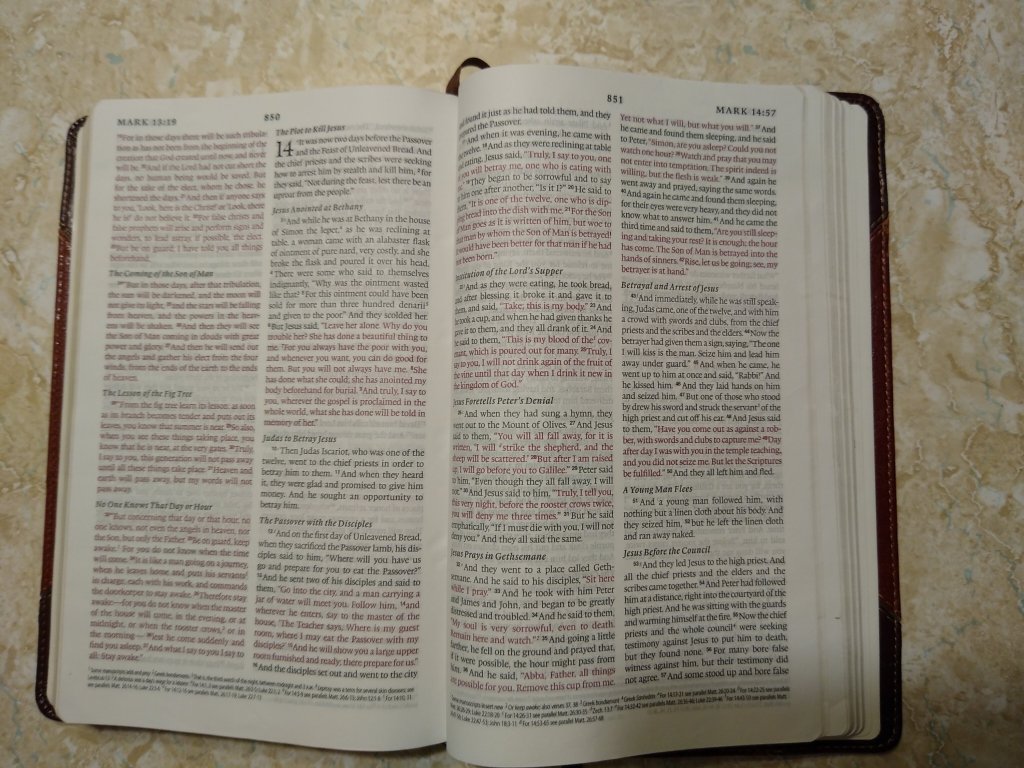
25 “Now his older son was in the field, and as he came and drew near to the house, he heard music and dancing. 26 And he called one of the servants and asked what these things meant. 27 And he said to him, ‘Your brother has come, and your father has killed the fattened calf, because he has received him back safe and sound.’ 28 But he was angry and refused to go in. His father came out and entreated him, 29 but he answered his father, ‘Look, these many years I have served you, and I never disobeyed your command, yet you never gave me a young goat, that I might celebrate with my friends. 30 But when this son of yours came, who has devoured your property with prostitutes, you killed the fattened calf for him!’ 31 And he said to him, ‘Son, you are always with me, and all that is mine is yours. 32 It was fitting to celebrate and be glad, for this your brother was dead, and is alive; he was lost, and is found.’”

The story ends there; it isn’t about the responsible brother. For that reason, we know the younger brother has a change of heart. He repents of his behavior and begs for mercy from his father. We see the father have mercy and chastise the responsible brother for his stinginess and bitterness. Whether he changes his outlook is beyond the scope of the story. In my experience, it’s difficult to convince people who are convinced of their own rightness that they aren’t always right, even when they stand up for what they view as justice and truth. God certainly does have a sense of justice, and his sense of justice is broader than ours. It’s based off the understanding that not releasing the largest debts creates empty seats in society. In a spiritual sense, the father’s table was previously absent of one son. In an economical sense, it means there are people who can’t operate in the normal business of commerce because they can barely pay back what they owe.

While it’s tempting for conservatives to paint all these debtors as irresponsible, this is quite literally not true. Some are no doubt sons (and daughters) who have gone astray as in Jesus’ parable, living off the largesse of loans with no thoughts to the future, but many signed their college loans out of duty and honor to their parents. They were doing what their elders told them was best. The nastiness of you’ve made your bed; now you need to lie in it regarding student loans is no different from the older generation’s disgust for the ignorance of a generation they failed to teach anything of value to. The debt crisis is partly your fault, in other words — if you happen to be the kind of parent who encouraged your children to go to college, all the while knowing that the pricing system was an absolute scam created by universities and lending institutions. You knew that, right, parents? You knew encouraging your children to sign on to inappropriately priced education wouldn’t necessarily mean they’d go on to get a great job and pay it off in a couple years — right? If parents were this delusional once upon a time, how can anyone blame eighteen-year-olds for being delusional, as well?

The only problem is Biden isn’t offering to write off all student loan debt. He’s putting a bit of candy in our mouths to tantalize us. Along those lines, I’ll be astonished if he actually cancels the debt rather than disbursing the debt onto taxpayers. Cancelling the debt, erasing it, pretending as if it never existed, is the only way forward for our economy. Cancelling the debt would be to remove so-called money from the system at the same time that the debt is cancelled. That magic $20k that was created on paper can just as magically be erased, and the crazy part is it doesn’t even require magic. It requires making the lenders hurt and hurt hard. They should hurt hard. The other group that should hurt hard is the universities. Don’t allow them to live off the largesse of the FAFSA system any longer. Make them go bankrupt, for all I care, until a new type of university rises from the ashes that offers competitive prices.

I have zero faith in Biden because he’s immoral. I doubt he cares that much about the economy. His free money to the Ukraine says how much he cares for our economy. He cares nothing for the people here. In other words, he’s not trying balance inflation through erasing debt. I don’t know why he’s doing it. It’s not to buy votes. When even the FBI openly admits they intentionally throw elections, we know votes don’t matter. Perhaps he’s only looking for good media spin to keep up appearances for the time being. I really don’t know. It’s hard for an ordinary sinful person like myself to get in the head of the truly wacked satanic types in power. We should still be asking ourselves why, even if his little sweeties taste delicious in the moment.

We Are the World

Every time I hear political moderates pretend to be very profound and truth telling when they point out that the media is trying to divide us, I want to start singing We Are the World, or at least the handful of lines I remember from it. I actually liked that song when I was elevenish, but mostly for Cindy Lauper. I would listen for her line and get quickly bored.

I get bored with political moderates too, or perhaps just the average wishy-washy conservative. The truth is the media doesn’t have to divide our nation; our nation naturally divides along ideological lines. We have no natural foundation, no basis on which to be aligned, except on meaningless ideals such as “liberty.” But what is liberty to this century was absolutely censored and censured when the Bill of Rights and Constitution were drafted — pornography and homosexuality, for example. Liberty is far too malleable a concept to form a nation.

And so the nation has divided along very natural fault lines between those holding to Christian morality and those who have traded it for drag queen story hour and pornography in public libraries. Librarians are ridiculous. They’re all about freedom of the press for material that would have been illegal to print up until about the 1960s. They’re so full of ideals that they stand for twisted adults with sexual kinks telling our children all about it.

Please just stop with the fits of fainting over “they’re just trying to divide us.” Who is? Our propagandist media organizations? Or perhaps the Holy Spirit will do that all on his own. After all, that’s what Jesus told us in Luke 12: “Do you think that I have come to give peace on earth? No, I tell you, but rather division; 52 for henceforth in one house there will be five divided, three against two and two against three; 53 they will be divided, father against son and son against father, mother against daughter and daughter against her mother, mother-in-law against her daughter-in-law and daughter-in-law against her mother-in-law.”

We are divided because Christians can’t stand for evil, and our nation really has nothing to hold it together. We have no common culture, no common religion, no common morality. Call me unamerican; call me any pejorative you want, but I do not seek union with those who call good evil and evil good. I therefore do not seek to repair the divisions except through the only means Jesus gave us, which was to spread the gospel and help those in need. That’s what matters, not pretending that those who oppose the slaughter of children can align with those who support it.

In summary: stop trying to pretend that you are a special kind of truth teller by pointing out that the media creates division. The media is part of the evil deceivers of the world, and apart from that, Jesus told us how it would be 2000 years ago. The only difference is he didn’t tell us to repair the divisions through wishy-washy politics.

A Place of Her Own

This is the title of a short biography of the life of Elizabeth Garrett, written by Ruth K. Hall. It’s no secret that I love biographies and autobiographies because they are, at least since James Boswell, intimate glimpses of people and their stories. Autobiographies are generally more intriguing to me than biographies; I like to see the epoch of history through the bias of a person actually living in it. This particular biography is short, perhaps written for a younger audience, and takes a positive spin on the central character. I’m guessing this is because the author knew the Garrett family. I suppose as far as living in the epoch and being in possession of biases, a biography written by a friend of the subject character is a close second to an autobiography…with one caveat. Most writers of autobiographies are willing to be honest about themselves, even some of the negative parts, but I’m not sure about the autobiographies written by friends. Those might well be a little glossier.

Regardless of this book’s honesty, Elizabeth Garrett is a character for New Mexicans to know. As her last name suggests, she was related to the famous sheriff who took out Billy the Kid. She was, in fact, his daughter, who was born blind. Due to her connections, she was part of the oeuvre of New Mexico, part of its lore and wild history. Through her father, she was part of the Anglo ranching culture, but through her mother, she was a New Mexican who spoke and understood Spanish fluently. She is also emblematic of my local area, where the Lincoln County wars took place. She lies at rest in the historic South Park Cemetery in Roswell, the name of which I have become familiar with, as I help to arrange funeral Masses in my job.

Most people outside the New Mexican world have heard of Pat Garrett, but her daughter also deserves her share of distinction. Her parents had the wherewithal to send her to a school for the blind in Austin, Texas — which was quite a train ride from her home at the time in Las Cruces, New Mexico. Her father desired that she learn to be independent instead of held back by her disability. More important, she learned the obvious skills of reading and writing in Braille, and the not so obvious skills of music. People who grow up blind have heightened senses of hearing, touch, and smell, but not everyone who grows up blind is blessed with a talent for music, as Elizabeth was. Through her musical lessons, she became a proficient singer and piano player, such that she was able to give lessons and support herself once she had graduated from the school.

As an adult, she had less fear than a lot of people who were born with sight, and arranged to sing her way to Chicago, where she wished to take singing lessons from a famous teacher. There was no guarantee the teacher would take her (he did), but that didn’t stop her from the adventure. After studying with him, she ventured on yet more travels and became somewhat famous as a performer. Part of her appeal was her ability to sing fluently Spanish folksongs she’d learned growing up.

But she is really famous in New Mexico for writing our state song, O Fair New Mexico. She used her non-sight senses to describe the landscape of the state and smattered the verses with Spanish words here and there. To be honest, I didn’t appreciate the New Mexico song until I knew more about the writer. It’s not badly written; that’s not it. I didn’t appreciate it as much as I did the Spanish state song (yes, we have that, too: Asi es Nuevo Mejico). Everything sounds better in Spanish. Yes, I’m biased. The writer of that song, Amadeo Lucero, deserves his own post.

Life in New Mexico at the time both these musicians lived was not easy, you see. It was the Wild West. It’s still the Wild West. We’ve barely managed to become civilized in this state, I’m sorry to say. That’s why crime is so high in almost every city and rural pocket. Elizabeth Garrett’s father was murdered, shot in the back, by men who were never convicted of the crime. This left her mother impoverished, and without her musical education, Elizabeth would have had a hard time getting by. Despite the pain and struggles, Miss Garrett and Mr. Lucero, as well, loved the beautiful land they were born in. And it shows in their respective songs. I’ll paste the lyrics to Elizabeth Garrett’s below, as this post is about her.

Under a sky of azure, where balmy breezes blow,
Kissed by the golden sunshine, is Nuevo Mejico.
Home of the Montezuma, with fiery hearts aglow,
State of the deeds historic, is Nuevo Mejico.

[Chorus]
Oh! Fair New Mexico, we love, we love you so,
Our hearts with pride o’erflow,

No matter where we go.

Oh! Fair New Mexico, we love, we love you so,
The grandest state we know — New Mexico!

Rugged and high sierras, with deep canyons below,
Dotted with fertile valleys, is Nuevo Mejico.

Fields full of sweet alfalfa, richest perfumes bestow,
State of apple blossoms, is Nuevo Mejico.

[Chorus]

Days that are full of heart-dreams, nights when the moon hangs low;
Beaming its benedictions, o’er Nuevo Mejico.

Land with its bright mañana, coming through weal and woe;

State of esperanza, is Nuevo Mejico.

[Chorus]

source: https://www.lyricsondemand.com/miscellaneouslyrics/statesongslyrics/newmexicostatesonglyrics.html

The Latest ‘Persuasion’

I watch every film interpretation of Austen that comes out. Therefore, I was not going to allow social media and very serious news outlets such as Vox and Yahoo to persuade me otherwise. They will try. They hated it, you see. Everyone hated it. But if it’s one message I learned from Austen’s book, allowing others to persuade me away from the right course of action leads to loneliness and anguish.

It was difficult not to enter this film with preconceived disdain for it. What I read about it was actually quite damning, that the producers had tacked modern vernacular and values onto the physical appearance of early nineteenth-century England. Jane Austen is popular for a myriad of reasons, and one of those is that romantic-era values are enticing to a population raised with little sense of value for traditions such as marriage. People also appreciate Jane Austen for her subtlety. Her characters have recognizable personalities that modern-day humans can relate to without having to hear those personalities speak in twenty-first century parlance.

On the other hand, Austen is subtle, and that leads modern humans to adapt her work in their heads any which way they want to. Nearly every Jane Austen fan I knew while studying her work in college lived unironic lives of fornication, while not valuing marriage and family the way Austen did. Rather, they drooled over the male characters and swooned over the dresses without the slightest hint of self-examination. As far as I know, most college students in this older millenial group have yet to do any real self-examination (I went back to school at age 28; hence, my fellow students were older millenials or very young Xers). I enjoyed my friends, but I left college with the sense that they had learned very little from their education, and certainly nothing from Jane Austen.

Bizarrely, I enjoyed this adaptation of Persuasion simply because it provides some self-examination for moderns. In fact, I’m going to go out on a limb and claim that’s why it gets such a bad reaction from much of its contemporary audience. This film is anything but subtle, and for those playing at a fantasy game of bonnets while doing exactly what the main character does — drinking wine to ward away loneliness — this is going to be an uncomfortable film.

First of all, let it be known that this film adaptation deals in irony and comedy. So does Jane Austen, but as I already stated, Austen is subtle. For example, Austen paints the youngest Elliot daughter, Mary, as self-absorbed and prideful, but weak and sickly at the same time. She is not the kind of heroine a modern audience looks up to — she’s, in fact, not a heroine at all. She’s grossly reliant on others while maintaining a sense of pride in who she is as an Elliot daughter. That’s why it was amusing to me rather than jarring when she and Anne have a conversation in which she talks about needing “me time” to do “self care.” This is the epitome of stereotypical modern women. They are self-absorbed victims looking for attention. That is why media outlets such as Yahoo and Vox feature real-world Marys who self-identify with their “invisible” illnesses, which they proceed to parade visibly all over the internet.

Not only are they like Mary, but they eschew marriage like Anne — except they are persuaded by their surrounding culture to not be traditional, while Anne is persuaded by Lady Russell. It doesn’t matter, though. The result is the same. Moderns end up lonely, unable to have children before it’s too late, and they drown their sorrows in wine. The book version of Anne has an outward calm and inner torment, but in this film version we see the private torment through her downing a glass of brandy or weeping on the bed. Rejecting marriage, and in this case with a man the heroine desperately loves, leads to sorrow. This is apparently not a pleasant sight for young and not-so-young-any-longer women to witness. It’s not subtle at all. It’s painful.

Moving on to Lady Russell, this is a woman who is all about maintaining the Elliot pride. She is shallow and cares for money. She thus advises a young Anne to reject a perfectly good suitor, bloating her protege’s head with all manner of arrogance in herself and her value on the marriage market. This is true in both the book and the film adaptation, which is Austen’s particular irony, as Lady Russell is herself a spinster. In the film Lady Russell admits to Anne that she “goes to the continent” to avoid the inevitable loneliness of spinsterhood. What does this indicate? It indicates that women who end up as spinsters also end up as whores. In Austen’s work, this is shown through the manipulative Mrs. Clay, who is not a spinster but a widow. Again, the book is quite a bit more subtle in its message. Also, I believe it is an anachronism for a woman like Lady Russell to openly admit to Anne that she leads a scandalous life on the sly. I repeat: the film doesn’t even try to be subtle in its message.

Inevitably, I must discuss the least subtle message of the film: most of the cast is composed of black or Asian people. Obviously, this would never have happened in Austen’s time. Mary would not have married a black man. Their cousin, Mr. Elliot, would not have been Asian. Lady Russell would not have been black. Is the film merely attempting an eye-rolling level of diversity, or is there a larger message here? I’m going to guess there is a larger message.

Yeah, about that larger message — the man Anne rejected so many years before the story starts is a navy captain. Navy captains in those days had the ability to become rich, thereby making themselves eligible bachelors to respectable landed gentry daughters. How did they become wealthy? They were mercenaries for the crown. In other words, they helped England colonize the globe. Persuasion was published in 1818, at the start of a colonizing century that would peak at one-quarter of the globe being subject to the crown of England. Therefore, men such as Anne’s Captain Wentworth brought Africans and Asians into the “family” of England, even if they were unwilling subjects. In the concert scene, when the camera slowly sweeps the audience, the diversity sticks out like a sore thumb. Obviously, I can’t get in the mind of the people who made this film, but my interpretation is this: shallow women like Russell (herself an ironically black character) pushed men such as Wentworth into whoring themselves for the crown so that they could find decent wives. This disrupted the social world of the day by raising these men’s statuses, but it also had the result of eventually creating a very diverse society. In a sense, what we are seeing in this film is ghosts of the future. The film barely pulls away from being critical of this now-diverse England through levity and humor and not resting too long in any one scene. The criticism is still evident, however, and this, again, is going to rankle a modern audience. Modern audiences such as readers of Vox do not like diversity being viewed through a critical lens.

Was it a good film, though? Clearly, I found its messaging ironic and amusing, but does that put it on my list of favorite Jane Austen adaptations? Earlier, I said that much of the audience will hate this film because it forces too much self-examination onto a modern audience. There is another subset of people who are going to be critical of this film for the unfortunate reason that nobody has ever made a decent Persuasion film that represents the book. I am one of those people. This film does not satisfy me on that level. I’m still waiting for a stellar version that follows the essence and feel of the book. For a start, this version has a brooding Darcy-esque Captain Wentworth (Cosmo Jarvis). While attractive enough to be the captain, he leaves a lot to be desired performance-wise. Anne (Dakota Johnson), Mary (Mia McKenna-Bruce), and Mr. Elliot (Henry Golding) are well acted, but only Anne is given decent screentime. The other characters left zero impression on me. Louisa Musgrove is almost a nonentity. On the plus side, the sets, costumes, and filmography are lovely.

Given the above, I don’t know how to rate this film. I’m pretty sure that after the furor dies down, clips of it will be used in college literature classes to invoke critical readings of the novel. I’m not sure that’s what any filmmaker really desires, though.

Book Updates and Breakdancing Films

Yes, after two years of implementing a system of writing 1000 words a day on a new book while editing a finished book, my schedule fell apart due to several factors, most of which I’ve already talked about on this blog. Some parts of life I never discuss because they involve dragging others’ private lives onto the internet, which I do not do. Lately, I’ve been ungenerous and have had thoughts such as “If [unnamed person] wants to behave badly, why should I hide the behavior?” It’s a natural attitude to develop over the years, especially for people who operate in the world as “reasonable and agreeable.” They lose patience after about age forty. As a writer, I document the world around me, AND I’m over forty — so far over forty I’m almost fifty.

Be that as it may, I place great value on respecting privacy. I want my space respected; therefore, I give space to others. That means only talking peripherally about people in my life on this blog. This is a book update, however, and part of my update is creating a journal of my life as a Catholic church secretary. It certainly has its intrigue for me, as someone who loves history and minutia. The interactions with church people are also endlessly fascinating to me, and I want to document them before I lose them to my bad memory. Hence, my first update is that I’m writing a journal of my job. I will not publish this book during my life, unless I live for forty or fifty more years. Instead, I’ll leave it in my will to my children or husband to publish for me. What I’m admitting here is that I’m spending a fair bit of my time writing a book that isn’t meant to go to market anytime soon. That is the primary reason I will never be a bestseller or popular in my time. That’s okay. I’ve lost hope regarding that, anyway. Or, as Eeyore would say, “If I ever had any hope, which I doubt.” I’m not Eeyore, thankfully.

That is why I’m still hacking away at the three other books I had been working on before these many life changes. They are, in the order that I had planned to publish them, as follows: my breakdancing Albuquerque cyberpunk I was calling, depending on the day, either Breakin’ Good or Breaking Lo Malo (yes, I know it’s an obvious joke); the Roswell PenTriagon alien sequel, which has no name as of yet; and my gothic ghost story, which was to be called something like The House of Redheads.

What about now? How are these books coming along? I’m so glad this was the pressing question in your mind! Let me tell you what has happened to my books. The breakdancing novel was near completion at around 150,000 words. Zoiks! I couldn’t bring myself to complete the final edits, either, because I had the distinct impression it had gone off the rails. When I read it over, I found it readable and intriguing. I could still pull off that lengthy version of the novel, bring it all together with some better editing and a stellar ending (the final scene was still lacking). But it wasn’t my original vision, which was to be like an eighties’ dance movie. The other books are still sitting pretty the way I left them, but this one I’ve started over again. Yes, I started it over. I could shed tears over the wasted hours, but I won’t. Instead, I’ve been rewatching the old breakdancing movies that inspired me to begin with. Watching the movies is, after all, easier than doing the hard work of typing for an hour every day. By the way, I have taken that up again, now that I’m no longer taking the freelance tutoring and editing that took up all my hours after work.

There are three seminal movies in this genre: Wild Style, Beat Street, and Breakin’. Breakin’ has a sequel, but it’s so much like the first movie in style that I’m not going to discuss it here. Wild Style and Beat Street almost operate as documentaries of eighties’ hip-hop culture in the Bronx. The first one is gritty, dark, and rated R. It is a worthwhile watch, though, because it boasts the actual famous graffiti artists Lee Quiñones and Lady Pink. It has everything: mixing, graffiti, and breakdancing. The same is true of the second movie on my list. The essential difference with that one is its PG rating. It’s a clean film unless you’re offended by bad language. In the early eighties, apparently, the F bomb didn’t merit an R rating. I find it to be a fair rating, on the other hand, because the movie doesn’t have nudity or sex, and there is one short fight scene between two graffiti artists. That is to say, it’s not a violent film, either. Both these films are very light on plot.

When we get to Breakin’, we leave that gritty Bronx documentary style behind. Dance movies are supposed to be goofy and fun and culminate in dance battles between rival groups or gangs. Right?! I love dance movies for their goofiness. I love dance movies because they are basically musicals with the emphasis on dancing instead of singing. I also really only like dance films that are clean. That’s why Flashdance isn’t a favorite of mine — the directors wreck the fun by introducing a tawdry sexual relationship and from what I remember, with all manner of steam and saxophones. Breakin’ is PG and takes the breakdancing world to the sunny, blue-skied world of LA. The ghetto in this series of films has tiny old houses rather than burnt out tenements, and the audience only deciphers that it’s the ghetto due to the graffiti. The focus is on dancing and goofiness, and the characters — the protags, anyway — are community oriented. For example, in the second movie, the plot goal is to save the community center where the local poor children can go to take dance and other art classes so they aren’t left to their own devices on the streets.

Breakin’ is how I imagined my book, except that it’s a murder mystery that takes place in a futuristic utopia version of Albuquerque. It’s The Minäverse world but set farther in the future. I don’t know where or how I lost the plot on the goofiness when writing it. It’s my proclivity to do deep characterization, and in this book, I also did a fair amount of unnecessary worldbuilding. I suspect that’s where the goofiness went. Oh, and another btw, I lost the goofiness in my first book, Anna and the Dragon, from first draft to last. I never want to make that mistake again — all of it based off reader response that I needed to even out the tone in the book. Was it a weird comedy, or was it a serious and somewhat dark novel? In my opinion, I took the wrong path with that book. It could have ended up as a dark comedy. But hindsight is 20/20, as the saying goes. And at the time I still cared about editor/critic/betareader input. I wasn’t past forty at that time and was still trying to play the game, in which I pretended to care what readers think about my books. Honestly, I have a difficult time forcing myself to care, anyway. Readers tend to not know what they want or need until a good author brings it to them; that’s why novels are called novel. Without authors starting trends, people gravitate toward what is most common and bland — what is sold to them and what they’re used to. That’s why people listen to bland music, too. The music execs spend a lot of time and money creating bland music, and it’s not until an indie artist off YouTube makes something unique that audiences realize that was what they always wanted. The publishing industry is the same, except they are mass producing politically driven propaganda. It is only indie authors who publish freely, the good and bad and everything in between. I don’t know if I will ever be the kind of writer who is good enough to guide tastes, but I’m certainly not the kind of writer who follows after industry-created reader tastes.

It’s the Little Things That Are Complex

And I’m not talking about mitochondria. I’m talking about what is truly meaningful to humans that we don’t grasp completely. “It’s the little things,” a parishioner said last Friday as she clambered into a train car built from a barrel.

Imagine if you will a priest driving a tractor, pulling a line of train cars that contained another priest and several workers/volunteers. Behind the train cars was a large covered caboose with two elderly nuns. The train went round and round the church complex before we all disembarked.

This is a memory I won’t soon forget. Why? I don’t know; it’s the little things that are complex. For a start, that train itself had taken a couple months and several men to complete, although it was the brain child of the maintenance man and janitor. They built it because the director of VBS had asked for it. She wanted it for the kids.

Besides the actual complexity in planning the parts of life that seem simple, there is something inexplicably joyful about trains. Perhaps they’re a sign of human ingenuity, hard work, and progress. I can’t really say, and this certainly isn’t the type of post where I’m going to delve into the “dark side of train slaves” because it has nothing to do with my point. But maybe it has more to do with the children than anything else, and adults love to be children again, even if it’s only for a short time.

I read an article the other day, which caught me with its dumb, clickbaity, and dishonest title: I was in debt and drank all day until learning to cry saved my life. I’m sure learning to grieve and process emotions is good for everyone, but what saved this man’s life was his kids…not learning to cry.

After deciding to commit suicide, he determined the next visit with his children would be his last:

“Suddenly the pressure was off and I knew it could be our last visit I could be more present with my children and I treasured the time together,” he said.

“It was such a good visit that I lived for the next one and decided to do the same the week after that and the week after that. Soon I wanted to sober up and live in the present moment for them for every coming week. They saved me.”

Just paying special attention to his children gave this man a reason to live. It seems so simple: you lower yourself to the floor and you play with your kids. Or you cuddle them while watching a movie. Or you play a videogame with them. It doesn’t matter, but it’s something so simple and yet so valuable. Why is it valuable? Is it because we have a deep biological imperative to pass our genes along, or is there something deeper going on? Something about fulfilling a godly purpose that connects us to a long line of our descendants? Maybe humans actually matter, and our own offspring matter still more because we should have a bond with them?

Earlier today, I was reveling in the joy of hugging and petting my dogs. That is an intriguing connection. Who can explain the bond between dogs and humans? They adore us, and we adore them in such an uncomplicated way. And yet just looking at their grinning faces and rumpling my fingers through their thick fur gives me a shot of calm. They ease my stress almost instantly. Why? I don’t know. I’m sure a psychologist somewhere has done a study on it, though.

Perhaps the most mysteriously simple complexity that brings joy to humans is music. There doesn’t seem to be a rhyme or reason behind it when coming from a materialistic worldview. Funny thing, if you watched season 4 of Stranger Things, you know they used the human connection to music as a way to bring a character from both literal and psychic death. She was put in a trance by the demonic antagonist, who played off her shame and guilt and fears to keep her there. The only way her friends could reach her was through music, which lit up a part of her mind that wasn’t under the sway of evil.

Of course, that show is horror or science fiction or both, but what makes horror so real is the darkness of evil and the reality of it in the universe. Dark spirits are real, and humans give in to evil. Music can increase darkness, or it can pull us out of it. But why? Scientists can’t explain music, not really, though they try. And they likewise can’t explain the presence of evil.

Speaking of, did I mention we also had canned train chugging and whistles to go along with the crazy train I rode on the other day? Those are sheer delight. I love them so much. They are like music to me. If I can’t explain a human fascination with trains, I’m sure I can’t explain why the sounds of trains are beautiful and endearing either.

We try to understand the mind of God, if we believe in him. But we hit walls past which God does not let us go. The ultimate simple meaningful joy in life, I suppose, is to be okay with that — to rest in God’s presence and enjoy the goodness he’s given to us without having to ask why. Passing that on to others, whether it be to our fellow passengers, our children, or our dogs is purpose with a capital P.

Dedicated to the Sacred Heart

Lately, I’ve been writing a journal with various thoughts on my job. I have many. Just as soon as I think I’ve heard it all, somebody calls the office and finds a new way to stump me. The journal, however, catalogs not only the learning process, but the interplay between people and priests and thoughts on the spiritual life. It’s the kind of journal I could never publish, at least not in my lifetime, as privacy is a central component of what I do. In order to publish, I would have to keep things vague and/or change names. I suppose that would be true of many jobs — a medical receptionist, for example, has an entire office filled with private information. My journal entries don’t often dwell on specific information, though. Just as often, I’m cataloging what we did to wing it for the Corpus Christi procession last Sunday, and how that turned out. In fact, I was going to adapt that journal entry into a blog post (I wrote it on the Monday after Corpus Christi), until Friday arrived. At that point, the stunning overturning of Roe V Wade took precedence in my mind and journal.

Catholics are celebrating, you see. They’ve been at the forefront of the prolife movement for years. These activists, who will leave prolife rallies with sad grimaces and “see you at next year’s rally” defeatist statements, are dazed and confused, wondering what just happened. But they are also in the thrall of excitement, the adrenalin flowing. At least, they were yesterday. Adrenalin will always wear off, but the general consensus is that what happened in the Supreme Court yesterday was a big win on the side of goodness and holiness, and it couldn’t have happened on a better day, when Catholics were celebrating the Sacred Heart of Jesus. The Sacred Heart is a special yearly devotion, particularly dwelling on Jesus’ love for mankind. It’s this heart that compels Catholics to fight against the scourge of abortion, which is in opposition to the Sacred Heart of Jesus. Abortion is antilife and anti-humanity. It’s evil at its finest and darkest — destructive to those whom Jesus died for before they’ve had a chance to perceive the sunlight, except perhaps what little penetration occurs through skin, muscle, and fluid.

A few weeks ago, a parishioner brought me a history of a local nun who is now in her nineties. She asked if it could be posted on a bulletin board, and if I could format it and make it look nice. I did format it, and I could understand why this parishioner wanted the story told. The nun had lived a life of service, including working for years in a home that helped teen girls. But what was particularly fascinating to me was her history of prolife rallies that had landed her in jail multiple times. Overturning Roe V Wade is what women like this Sister have been fighting for all these years.

I know this post could merit some cynical responses, particularly from conservatives. I’ve already heard those, seen those. Yes, I realize that overturning Roe V Wade didn’t outlaw abortion nationwide. We still have a war in front of us, both politically and culturally. And yet, this is still a win. Conservatives are loath to acknowledge any win in a larger battle. They come up with reason after reason why overturning Roe V Wade was not a good decision — I think conservatives must be the real Eeyores amongst us. This is part of why I haven’t called myself a conservative in a very long time. Their attitude is simply rotten. If they can’t acknowledge the goodness in overturning Roe V Wade, perhaps they could acknowledge that a Supreme Court justice decision that overruled all state laws is at the very least unconstitutional. Roe V Wade should never have had the overarching affect that it did. Getting rid of it will help restore state rights, at the very least.

It does something more, though. It rips open that outer layer of demonic possession of our nation. Yes, that sounds a bit extreme. As someone who believes in the spirit world, I don’t know what else to call the slaughter of babies. We had a veil over our nation that didn’t allow individual regions to stop this bloodbath from occurring. Every time a state or county or city tried, it was challenged at the Supreme Court level and held up to the supposed sacrosanct Roe V Wade. Now we can have sanctuaries for the unborn, in states like Texas. Of course, there will be backlash. Of course, the evil entities of the world will find a way to turn this decision to their destructive ends. That doesn’t mean it wasn’t the right decision to make. It just means there will be more work to do.