January News

The print of Delivering Hope is now available: https://www.amazon.com/dp/B0CQRNT46R. If you would like a free copy of the ebook, please let me know. I only ask one thing: if you like the book, tell someone. Word of mouth is the best marketing.

I’ve started the sequel, and it’s moving at my normal pace of 1000 words a day. Its official title is Delivering the Goods & the Bads.

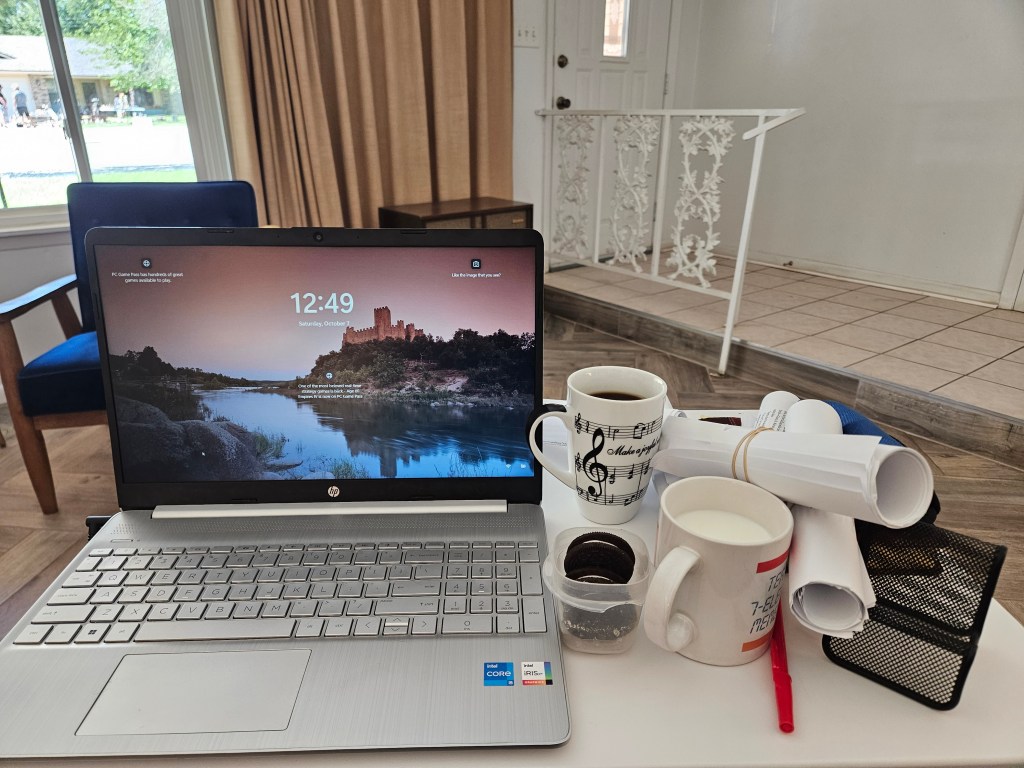
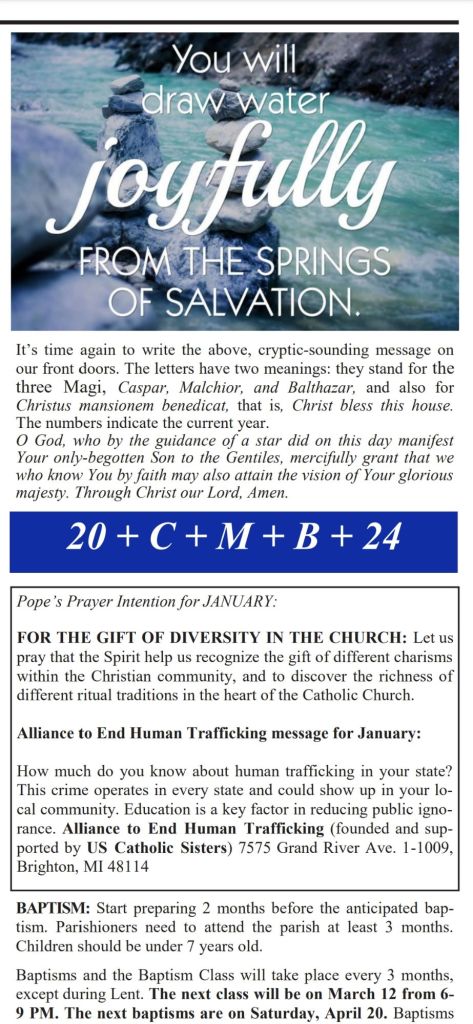
The Christmas tree came down on Epiphany Sunday, after I’d written on the front door with blessed chalk: 20+C+M+B+24. Because I’m feeling particularly lazy, here is the screenshot of the snippet I wrote for the weekly bulletin I create at my job:

I glimpse into my worklife….

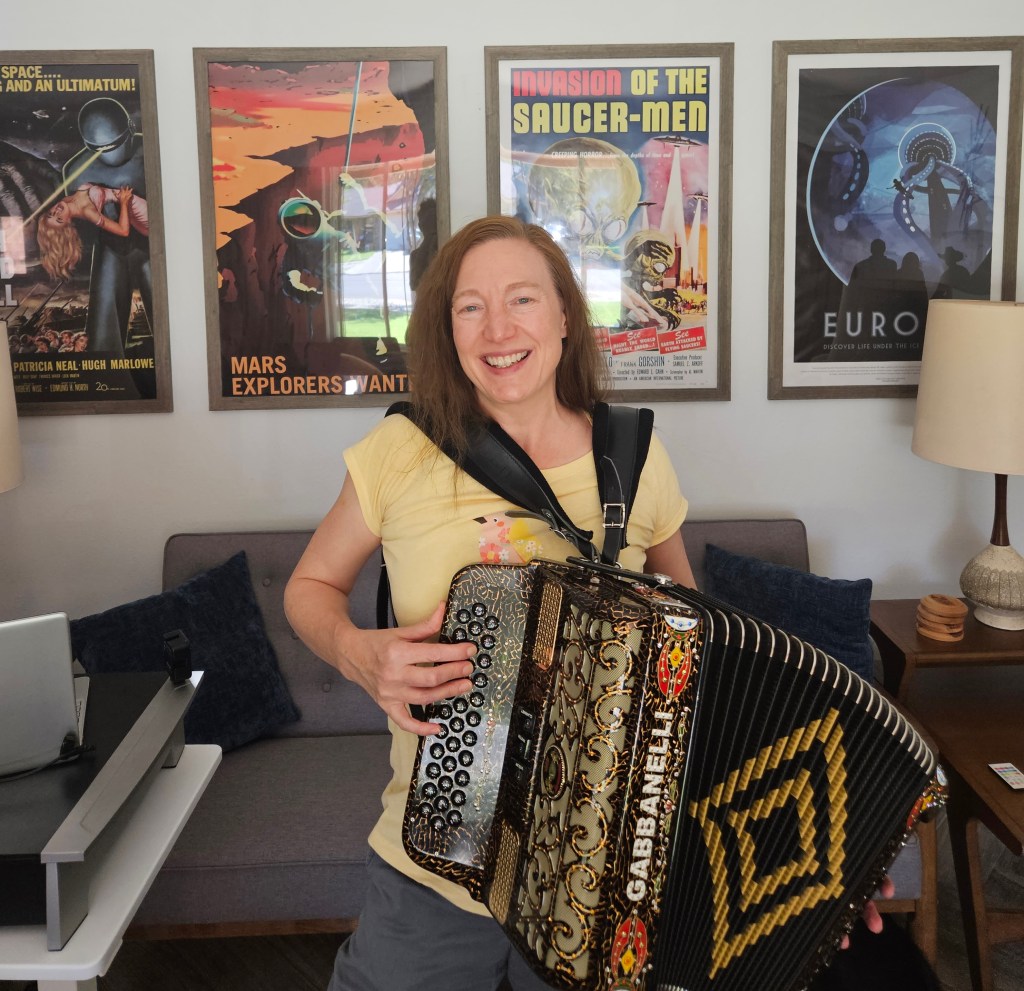
I continue to make YouTube videos, in which I blather about nonsense. I even developed my own theme song. It’s called El Vuelo de Las Libélulas. I know; surprising, right? I’m trying to get over my awkwardness at playing the accordion on camera.

My dogs are brats. Did I just openly admit that? They are adorable brats. But they give me love, which is hard to find in the world. God loves purely. Nobody else does. Except dogs. I mean, they love you extra if you give them bacon, so maybe that’s not pure, but at least it’s predictably simple. They also openly display their love, not to mention their joy at loving. Humans instead display their misery in love.

Maybe I should stop listening to the song Qué Agonía five times a day. It’s such a good song, though. I will post below.

El Paso

Eden Muñoz

As an aside, the app is giving me writing prompts, as if my problem is a lack of content rather than a lack of time! Today’s prompt is “What is your favorite form of exercise?” The answer is definitely a nature hike, but how often do I take a hike? Almost never. So, the actual answer ends up being “Whatever I can manage in my living room or when my dog drags me on my walk.”

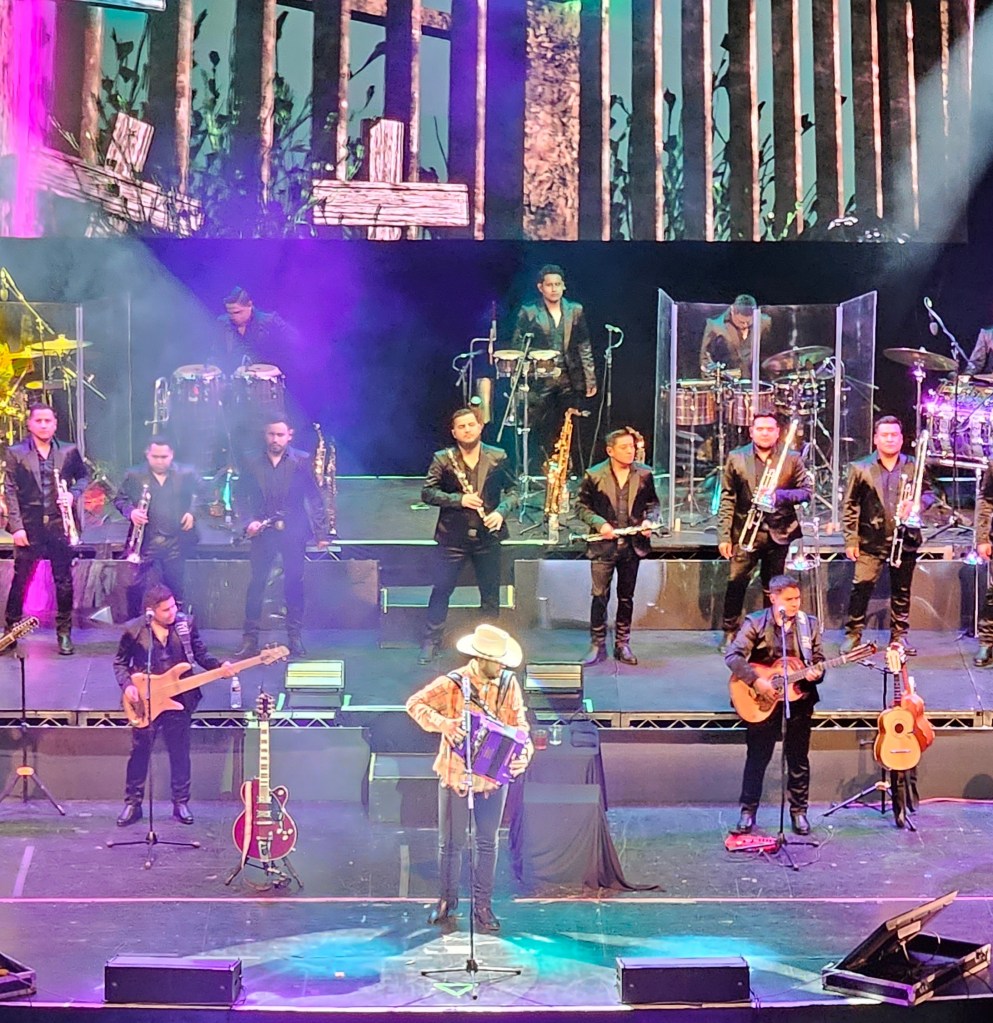
Back to the program: El Paso. I went to El Paso this weekend to see Eden Muñoz live in concert. Eden Muñoz used to be the singer and accordion player for Calibre Cincuenta, but he went out on his own. Calibre Cincuenta was one of my favorite bands. We’ll see what they produce without Eden Muñoz and whether they remain one of my favorite bands. They are in a class of norteño called norteño-banda because they incorporate a sousaphone in the mix. Traditional norteño for a while now has incorporated a saxophone; the sousaphone is a bit of a nice change, in my opinion. Of course, norteño-banda often has the full brass band. Eden Muñoz has gone all out for the full brass.

The concert was amazing. The only drawback was being in the Abraham Chavez concert hall where there is no dance floor; the music is meant for dancing. But still, imagine two accordions, a bajo sexto, a tololoche, a vihuela, a full brass section, and multiple percussion instruments. The music is very complex yet draws a young audience because of the resonant lyrics and the danceable melodies. Also, the music traditions are carried on and reinterpreted by younger musicians.

I’m explaining this because people are generally surprised that I love this music so much, and it shouldn’t be surprising. We have some intriguing musical traditions here, in classic bluegrass or Zydeco, for example, but they don’t quite reach the level of impact that Mexican music achieves. My reaction to Mexican music is at the level of visceral, reaching my heart and soul, so I’ll just leave it at that and not overexplain it.

The theater is in downtown El Paso, and the hotel I reserved was less than a mile away. Because I’m from New Mexico, the state with the highest crime rate in the country, I’m used to hotels being behind gates and a general creepiness when walking around at night. I have been assaulted in Albuquerque while walking at night because I wouldn’t give a crazed drug addict money; my daughter has been mugged; car thefts and property crime are part of the culture here.

Imagine my surprise when I didn’t feel uneasy walking in downtown El Paso at night; this isn’t what I’m used to. I’m not an anxious person. I don’t worry about much of anything. I’m often surprised to hear that women fear for their lives constantly and that this is something men don’t understand about women. At least, this is what I’m told. I can guarantee you that I can’t remember the last time I feared for my life. When I was 14, I almost drowned in a lake. So, more than thirty years ago…? But it’s still good to listen to feelings of unease, which you will get if you visit Albuquerque. Sorry, that’s just the reality. Roswell isn’t much better. It’s smaller; that’s all.

Anyway, I found El Paso refreshing because I wasn’t bothered by crazed drug addicts. Yeah, I’m sure there are plenty there, but I’m guessing the local police must clear them out regularly. Anyway, I’ve always been fascinated by weird places like El Paso. It is a weird city because it’s the pit or hollow of the American Southwest. The landscape is hilly and has mixed architectural elements. Oh, and Juarez backs right up to it. Juarez used to be fun to visit, too, but I haven’t been in years. It started getting a little crazy with the violent crime. Like Albuquerque.

This morning, I walked a few blocks to attend Mass at St. Patrick’s in downtown El Paso. It’s a beautiful church with bad acoustics. I couldn’t hear a word of the homily or readings, but God’s presence will still fill a church during Mass. His presence doesn’t require hearing. The only missals I could find in the pews were in Spanish. Can I read Spanish? Of course. But the Mass I managed to make it to was in English. Ah, well, it took me around five minutes or so to realize I was even reading Spanish. My brain is so accustomed to Spanish by now that I found myself the other day accidentally (mentally) translating English into Spanish instead of the reverse. I wish this was a sign of fluency, but I rather think it’s a sign I’m going out of my mind. It’s been happening for a while now. Going out of my mind, I mean.

Who Knew?

God is my favorite health & beauty “guru”. This Psalm of David struck me yesterday:

Bless the LORD, my soul;

all my being, bless his holy name!

2
Bless the LORD, my soul;

and do not forget all his gifts,

3
Who pardons all your sins,

and heals all your ills,

4
Who redeems your life from the pit,

and crowns you with mercy and compassion,

5
Who fills your days with good things,

so your youth is renewed like the eagle’s.

Psalm 103:1-5, NAB

Notice the pattern, though. David praises God first, thanking him for his gifts and for forgiveness of sins. He also thanks God for his health. Then, he says that God fills his days with good things, and these are what renews his youth.

I love this. I’m honestly terrified of stagnation; I never want to be in a place in my life where that occurs. Why? It makes you old fast. If you sit in the same chair by the same window every day, both your mind and body will grow old and weary. In contrast to that, God fills our days with good things that will rejuvenate us.

Thank you, God, for new blessings in my days! I feel younger just thinking about it.

Good things in my days!

I will become a norteño song

Quiero ser un rincon soleado / donde me puede amar a mi amado donde me puede amar mi amado or donde puedo amar a mi amado

That is the start to a norteño song because, you know, I might as well write them. Scott Adams has an intriguing view of success, claiming that a person doesn’t have to be a genius at one skill to gain success; what’s needed is a stack of middling competency skills. When those skills are combined, voila, there you are: success! I’m laughing a little at my ridiculousness, but it was true for him. For example, he’s neither a great artist nor a comedian, but he’s reasonably insightful, witty, and apt with a pencil.

My middling competency includes a degree in which I studied both English and Spanish poetic forms and even translated Sor Juana’s poetry for my dissertation. I’ve also written a fair number of poems in both languages. I’m brazen that way. Many years ago, for example, I wrote a poem called Oda al acordeón. If I can find it, I’ll post it, even though it’s no doubt quite awful. It was heartfelt, whatever the case.

I can also sort of play the accordion, I can sing on key if not amazingly, and have over two decades of obsession with listening to the tropes in norteño songs. I can do this! On the other hand, writing actual musical notation is probably beyond me, though I do know the tonic notes on my instrument.

Further updates on life: the golden dragonflies are still following me everywhere. They hover outside my office windows for hours. If not for magical thinking, life would be incredibly boring. They are my friends! They come to visit me particularly! Meanwhile, I’m at that desperate point in my book where I’m so close to the end and not quite there. Currently, my delivery driver and his band of merry fellows (brother and two old high school friends) are at a rotted-out childhood pirate ship/fort, rescuing the heroine, who has been kidnapped, tied up, and gagged. Sadly, the hero has to be be the one to rescue her, so while one friend (Stephen) is swinging from a rope, and he and his brother Lorenzo are engaged in hand-to-hand combat, Wilford (the other old friend) is going to set the heroine free, but…wait! Stop! No! Only our trusty delivery driver can do the job. So she’s left bound and gagged until he can manage it.

There are two murders that must be solved, and the heroine’s son must also be saved. The arc of the book reaches a small climax at the pirate ship, the largest climax at the fight with [redacted], and then the most tense but least action-oriented climax at the boy’s rescue. Finis. The dragonflies are now happy.

Oda al acordeón (I should have put this through notepad, as I copied and pasted it from an archaic file format and proceeded to email it to myself):

El gran estuche negro se reposa

en mi cuarto a veces;

Es un sueño, sí, como mariposas

que en crisálidas duermen,

para que, adentro, descansen loas,

sonatas y sonetos de las sombras

y marea, liras mojadas en losas

que brotan de la fuente.


Una vez abierto, sobre los muelles

se derraman las olas,

el sonido, el respiro me vuelven,

la copa poderosa

de licor me llena mi anhelo tenue

por lengüetas que vibran lentamente,

por manos que abren mi voz, un fuelle

que, para mí, resopla.


Al fin, es un sabor, dulce a la boca;

no es nada, sino muerte

que en mi cama, sobre mi piel, se frota.

Son hebillas con cierre,

sombras sin sonetos; todas las cosas

que alimentan sueños, ya no me tocan.

Se transforman en canciones llorosas,

entonces se suspenden.


Quiero que la música nunca cese,

que nunca esté sola,

que el acordeonista nunca me deje

entre palabras rotas,

que su estuche negro nunca lo lleve

de mi cuarto como un amante leve

cuyos dedos son aire de repente,

espectro de mis coplas.

Jill

La decisión más importante…

…es, ¿cuál marca de acordeón debería comprar? When I first started playing, the decision seemed obvious. The most common student accordion is the Hohner Panther, and its sound is surprisingly nice for a cheaper instrument. Hohner is a trusty brand of German-made accordions, though I’m guessing the Panther is cheaper because it’s made in China.

As a self-taught musician, I’m no expert on brands. I can only listen and follow what sounds magical to my ears. That was why I chose a Gabbanelli to replace my Hohner. I realized that most of the musicians I enjoy play Gabbanellis. I also listened to numerous videos of people demonstrating the various brands of accordions, and I tended to prefer the Gabbanelli sound.

But now I’m considering buying another accordion, and I’m wondering if I should buy a different brand. I could return to the Hohner brand with an upgrade from the Panther. The Hohner Corona was originally designed with Flaco Jimenez in mind, and as far as I know, he’s always played Hohners. So did Celso Piña when he was alive; they’ve now developed an accordion called the Rebelde after him. The band Los Tigres del Norte also prefer Hohners. Again, the company has an accordion in honor of this legendary band. For the record, I find Los Tigres a little too whiny and brassy for my taste, but I have still loved a good many of their songs over the years. Their repertoire is enormous, and I can’t judge an accordion brand over their whininess.

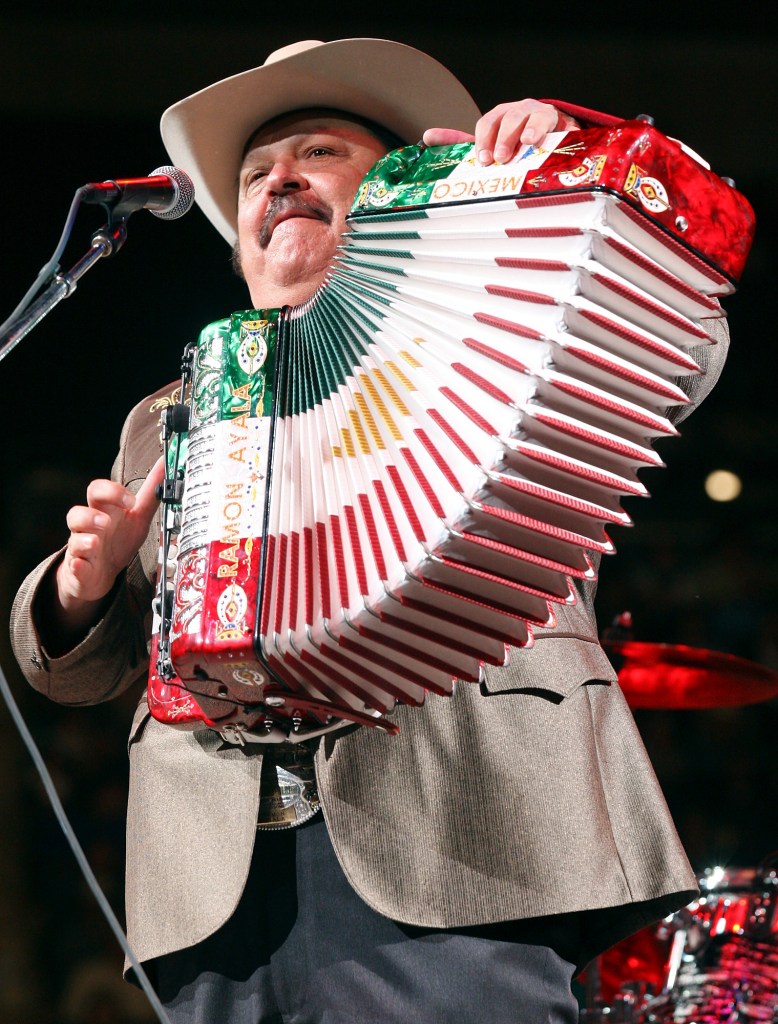
Then, to confuse me further, the Cantabella is the brand I’ve seen my latest favorite band, Los Dos Carnales, playing. Their songs have a wonderful sound. I would love to hear that sound when I play. Not that it ever works that way precisely. I never sound exactly like other musicians. Some people are good imitators. I’m not. I’m not proud of this because it means I’m deficient at hearing and replicating. By the way, Ramón Ayala also plays Cantabellas. He’s a poster boy for that brand. But he also plays Gabbanellis. His iconic Mexican flag accordion bearing his name is a Gabbanelli. One of them is, anyway. The other is a Cantabella. The Gabbanelli has little fish on it. I will always recognize those iconic little fishes. My Gabbanelli has the little fishes on either side of the brand name. See below this post OR below this paragraph. His little fish are surrounding his name.

The acordeonista for another favorite band, Calibre Cincuenta, plays a Dino Baffetti. Speaking of sound quality, it’s hard to beat this accordion. The creator of the Acordeonísticos site I subscribe to for tutorials plays a Dino Baffetti in recent years and might even be a sales rep for the brand. I’m pretty sure I read that on one of his social media sites. Not being on social media sites (except this one), I don’t pay regular attention to anyone. When I was looking into subscribing, however, I read his other sites. I’m guessing this brand is in the same price range as the Gabbanelli accordions, but it’s hard to tell, as they don’t post prices on their site.

Yes, this post was mostly an excuse to write about accordions, despite that I don’t have an audience that cares or is in the market for one. All of that is immaterial, she said with a snooty wave of her deft, accordion-playing fingers. I want to buy one; I’ve been pinching my pennies to afford another. However, what I thought would be an easy decision is not. I plan to visit the Gabbanelli store this summer (yes, there is only one store in the entire world that sells them). Maybe I will be so overwhelmed by the bling that I will never buy another brand.

¡Ay, dolor, hecho de la música!

My history as a musician is a sad one, or a lacking one. Sadness is for those suffering losses. I simply lacked education and/or the motivation to get it. I never learned to read music, for a start. We had free violin lessons at school, but they taught via the Suzuki method, which did not teach sight reading of music until students were at a more advanced level than I reached. I took up the guitar in high school but mostly learned chords and scales. I gave it up at some point in my twenties, as I wasn’t passionate about it. There was other dabbling, such as with harmonicas and piano. My skills for my dabbling instruments never moved beyond beginner level. In other words, I’m not a natural at music. Fast forward to the future when my heart was taken by the accordion. Learning an instrument, really learning it this time, in one’s forties is probably not the best way, but it isn’t impossible.

At the start of my journey, I had a few instructional books, including a book of scales. I used to keep my books in a pocket in my accordion case. It wasn’t a proper case, but a “gig” bag. That was why it had a pocket in it for music. As it was a cheaper Hohner Panther accordion, buying an expensive hard case for it didn’t seem worthwhile. All my books were, therefore, destroyed with the Hohner in the accident. Some of these books I’ve moved past in skill and don’t care much about. Others, I’d like to replace, but, unfortunately, they are all out of print and nearly impossible to find. One of them specifically taught sight reading for the accordion, which I appreciated, albeit it used the American music notation. None taught the songs I listen to on the radio — or YouTube or Spotify. I had one video tutorial I’d purchased on CD that had Flaco Jimenez teaching some traditional songs. Just watching him is inspirational. Flaco is the best. Also, I like his personality.

I’m a stereotype, really, amongst norteño accordeonistas because the first song I learned was Tragos Amargos. It’s not a difficult song, though I’m not sure why it’s the ultimate song for student acordeonistas to learn first. It’s funny how the word “ultimate” has evolved in English to not just mean “last” but to also imply something is “the epitome.” Because I listen to Spanish so frequently, I found myself adding the word “first” as a descriptor so that my audience didn’t think I meant “last.” Moving past that little rabbit trail, I found Tragos Amargos on El Bigshow’s YouTube channel. I used to love doing his tutorials. I still do them every once in a while. He’s easy to follow and has a teaching personality I like; I’m particular about personalities, and that’s going to be a heightened snobbery regarding any artists. I’m sorry, I apologize — it’s just that artists are annoying. Anyway, for most people struggling to pick up an instrument, mastering a song they enjoy will help get them past the hurdle of frustration that comes with learning an instrument. There’s a reason I used to force myself to play only half an hour a day five days a week. It was hard work, but I knew if I put at least a little time in, I’d start enjoying it and experience less frustration. Now I play an hour each day, seven days a week. I would play longer if I had the time.

Another goal that helped me jump over my hurdles of frustration was to be able to play along with songs I liked. It’s one thing to know how to play a song. Playing at speed and with good musicality is another skill. The first song I could play along with was Abeja Reina. I didn’t, however, learn that from one tutorial. I learned the song from various sources, including listening to the song itself (by Los Traileros). Playing with my favorite accordion players has been tricky, to put it mildly. Yes, I can play a handful of simple songs with the recordings, such as the aforementioned, and La del Moño Colorado, Navido Pavido, Hay Unos Ojos, etc. Simple songs…but honestly, playing along is a big hurdle to jump over.

Sometimes, I look at my musical history and realize that it’s a royal mess. Despite never learning to read music with fluency, I did learn the basic structure. FACE and Every Good Boy… You know. And then along came this obsession with norteño, and I’ve had to adapt to the tonic scale. In Spanish, the tonic scale is do, re, mi, fa, sol, la, si. No ti with jam and bread, sorry. I play a Fa accordion, which has a row of Fa, Sib, and Mib. The b stands for bemol, which means flat. In America, they are denoted as F, Bb, Eb; I assume the b used for flat comes from the Latin. This is the most commonly played accordion in norteño; that’s why I chose it. I’ve also noticed numerous songs are played in Sib and Mib. I was listening intently to a song the other day because I wanted to learn it and realized the entire song is played on the Mib scale in terceras (thirds). In theory, it’s an easy song to play. More on that in a minute.

I often watch Body Project videos for my exercise, and even when they’re not that difficult, Daniel, in his Aussie accent, tells us we’ve gotten to the point of “mass carnage” on the exercise floor. That’s how I feel about my musical journey at this point. Norteño musicians speak and sing and write in Spanish. They use the tonic scale…in Spanish. I started playing in my forties. I’m still in my forties (for a little while longer), so I haven’t been playing that long. It’s carnage, my brains splattered everywhere. Some days, I understand everything because my brain has adapted, and other days, I just can’t. I can’t figure out the fingering on a song, and if I watch a tutorial, I can’t understand the Spanish. Well, I’m sure I can. It’s just so much extra work. And I’m tired. I suppose opera singers feel the same if they didn’t grow up speaking Italian or German. Maybe scientists do, too, because it’s guaranteed they didn’t grow up with Latin spoken at home. If I’m going to be a norteño accordion player, Spanish will be my trade language, and I have to accept that. By the way, I love Spanish. My love of Spanish long predates my love of the accordion. The only problem is it’s not my first language.

Unfortunately, I’ve reached a point where the frustration with my instrument has returned. Yes, it’s carnage on the exercise floor. I don’t know how to push past this intermediate level I’m playing at. If my fingers were more flexible or if they could keep up with the complicated songs, I could enter the realm of competent musicians. Being competent isn’t what it’s about, though. It’s about the magic. That’s what I want. There are mechanics to it. A song that sounds easy almost never is. There are runs of hidden notes that are played in fast arpeggios that add to that sound but aren’t immediately obvious. And don’t forget the trinos. Trinos are everywhere. In English, that would be a trill. Trinos are what give the norteño accordion such a distinctive and magical sound, and they aren’t as easy as noodling back and forth between alternating buttons; I mean, yes, they are that easy. But there is still a technique to it. There is also the…whatsit that can’t be defined or broken down. Achieving that is like trying to physically capture any intangible. Music itself is inexplicable to a materialistic world. How does one capture the inexplicable? The magic? The thoughts, prayers, or feelings that can’t be put into words? The norteño accordion is, in my not so humble opinion, the most magical of all instruments. I just wish that magic would emerge from my fingers.
Un Instrumento Mágico

Every so often, we manage to go to a concert. For such a small town, we get some big norteño acts, such as Conjunto Primavera. This last weekend we went to Grupo Liberacion, which is a classic Mexican band. To be honest, there were so many acts coming up, I wasn’t sure this was the one I would choose. But I didn’t get a chance because my husband bought tickets with our neighbors, and we went as a group. This was a positive. The concert or baile, to be exact, was in a small venue, the Epiq Nightclub, and I was quite surprised at how many people they could pack in there and still have room for a dance floor.

Grupo Liberacion is really a rock band, but they have done a little bit of everything regional that a Monterrey band would produce; that is, they have a repertoire that includes cumbia and banda. During the 80s, they hit the keyboards pretty hard, but they never failed to have catchy songs. At this event there were about ten band members, including a saxophonist, as well as a keyboardist who doubled as an accordion player. Because they are really a rock band, they had a rock guitarist and bass player. They were very impressive, their performance topnotch. I was particularly impressed by their singing. These men are true performers with incredible voices.

Like all bailes, this one had three bands (some even have four); they start at about 9 PM and go until 2 AM. Yes, that’s a lot for a person not in her twenties, such as myself, but, strangely, there are always people much older than I am dancing until 2. Mexicans are superior that way. They definitely have their cultural strong points, and the ability to dance all night is one of them.

The first and second bands were fairly standard conjunto acts, Conjunto Rienda and La C Norteña. Both were good, the second especially so, and I found myself taken with the acordeonista of La C Norteña. More on that in a minute. First, a definition of terms is in order: conjunto is the term for a norteño band that includes an accordion, a saxophone, and a bajo sexto. Of course, there are drums and a base, but the three instruments I just noted are what make conjunto special. I’ve loved conjunto for a long time; some of my favorite bands, such as Los Rieleros, are classics of the genre.

But I have to admit that lately I’ve become increasingly frustrated with the sound of the saxophone because unless a band really mixes it well, the brassy sound doesn’t complement the accordion at all. AT ALL. I can’t emphasize that enough. In bands like Conjunto Primavera, the saxophone sound predominates many songs, and their sound is so iconic that I accept this reality. In concert, the accordionist and saxophonist being the same person, the songs either had saxophone or accordion, not both together, which is better in my opinion.

Now getting back to the acordeonista that I was quite attracted to (his sound, not him obviously, though I imagine accordion players are chick magnets), I would be just getting into his accordion parts when the sax player would jump right in and obliterate the sound. The saxophone is a dominant instrument, and the players thereof need to be put in the back with their mics turned down to highlight the truly important instrument, which is the ACCORDION.

Sax players need to stay in their lanes, in other words. The sax simply doesn’t have the magic of the accordion. The magic of the accordion is what I live for. It is what I need. It is what I try to achieve. It is why I come home from work and play my instrument every day. The thought of playing it gets me through the day, in fact. Forget about errands — I shouldn’t admit this, but I let myself run out of soap and deodorant for more than a week recently because I always forget to stop at the store when I have my Gabbanelli waiting at home. Did you know shampoo works great as a body wash? It’s true. And scraping the last of the deodorant tube is just good economy… If you don’t quite get it yet, I’m focused and driven to have the accordion in my life, and when I hear the sounds of magic from a good accordionist, I don’t want it suddenly smothered by the primadonna saxophone.

There is a genre I’ve been listening to lately that has replaced the saxophone with a sousaphone. Now THAT is a complementary instrument to the accordion. Sousaphone players provide a pleasant background rhythm that still allows the most important instrument to roll out its magic. Sousaphone players know to stay in their lanes. As far as I can tell, this genre is called norteño-banda, which makes sense, as banda will have a sousaphone or similar tuba-style instrument. I would like to find a friend who plays the tuba or sousaphone; then I could have a rhythm section. For what, I don’t know because the likelihood of my ever performing is about zero. However, I’m still trying to work out some songs about birds because they make the best norteño and banda songs, even if I don’t know precisely why.

I admit I know nothing about the first two bands that played on Friday night, but when I went looking for a video of La C Norteña, it was obvious the first I played had been filmed here in Roswell. A local band, then? The ice cream shop featured is Yoly’s, one of my favorite places. I mean no offense to a local saxophone player. Maybe I do, to be honest. He needs to step back a little when playing live. We all know the accordion is superior and needs to be heard.