Christian Marriage

There is a Trad Wife trend going on social media. I didn’t know it was a trend, albeit, I did see video shorts labeled as such filtering through my YouTube feed. It’s difficult for me to parse YouTube algorithms. I get dating advice, too, but I’ve never actually searched for such channels because I’ve been married for almost thirty years. Maybe dating advice is also on trend? Or maybe my actual searches add up to Trad Wife and dating advice? I primarily listen to Catholic and Protestant apologetics videos. Secondarily, I watch accordion tutorials and music videos. Thirdly, I still watch food budgeting and recipe videos, even though I’m at a point in my life where I do little cooking. Occasionally, I click on a video because it sounds intriguing or like a trainwreck I can’t turn away from. The Trad Wife trend might fall into “trainwreck.”

I learned this hashtag was a trend when one of the Protestant apologetics creators, Allie Beth Stuckey, made a video on it. My take on what I had seen was that it was based off of a lot of naivety. In one or two cases, there seemed to be a cosplay, sexual kink aspect to it, in which the wife primps like Marilyn Monroe and pretends to be a traditional wife, something which Marilyn Monroe was not. A sex kitten Hollywood starlet is not what any normal person would call a trad wife leading a trad life, though there perhaps is a parallel to the way in which she was owned and controlled by immoral men and the way in which these trad females wish to be owned and controlled by, hopefully, moral men.

Hopefully. I tend to make no theological arguments regarding marriage dynamics. We have no intact traditional culture; therefore, traditional Christian marriage roles end up being acted out artificially in our times. The most successful marriages I have witnessed in my years in very conservative Christian circles (I was a homeschool parent for years) were egalitarian marriages. The least successful I have witnessed were philosophically patriarchal with much talk about female submission and male leadership. The results have been so catastrophic in some cases that the children have left the faith altogether for agnostic or even deviant lifestyles. As someone who is a lifelong observer who doesn’t prefer to join movements, what I have witnessed is a sign that we’re doing “trad marriage” wrong, or maybe putting all our eggs in a one- or two-verse Scriptural basket without much thought to the examples put forth in the rest of the Bible.

I will add a caveat in here that, although complementarianism was a term invented by Baptists, the concept is held by the Catholic church, as well. There is no doubt that men and women are different in nature and that society requires both to function. But I do not see the hard and fast rules in Scripture that moderns preach. I see women such as Rebecca and Abigail defying their husband’s authority and unwittingly siding with God’s position. I use the term “unwittingly,” but I don’t really know this; maybe Rebecca’s deception was based off a God-given conviction that Jacob was the son God had chosen. That brings me to another point: God defies human wisdom and hierarchies regularly by raising up second-born sons. Getting back to Abigail and her siding with David instead of her husband at a time when no one yet knew he would be king — that man she sided with was a youngest sibling with many brothers ahead of him in the hierarchy. He was not even the second son! It is obvious, no matter what words you want to use to convince me otherwise, that God doesn’t think much of human hierarchies, and that includes women being on a rung below men. Go read the Old Testament, and you will find other examples of this phenomenon.

Modern-day marriage is a mess. Traditionally, people were married when they were too young* to really consider the consequences of being stuck with someone who might very well become loathsome after twenty or forty or even sixty years of marriage. But, thankfully, there was rarely a way out of the prison they’d placed themselves in. Yes, of course, there are stories of men divorcing their wives (historically, it didn’t generally work the other way around) or of men having their wives committed to asylums when their wives became annoying and asylums were a thing. Otherwise, though, the best hope was that a married couple would end up loving each other more as the years passed. I don’t think this was ever common, though. Am I being cynical? Maybe a little. Nowadays, I’m not even certain I would recommend people marry young because of the ease at which divorce is available. It’s probably better to wait until you aren’t a fool and know yourself a little better, so that you can marry someone you enjoy being around instead of filing for divorce once you’ve realized what a fool you were. I see so many divorces and subsequent remarriages where the husbands and wives are much more mentally balanced with partners chosen at mature ages. I even see this in my job. The Catholic church does try to prevent them by restricting annulments and remarriages, but they still happen all the time. The drawback, of course, is people aren’t even bothering to get married nowadays due to the fact that it’s a sham. Consequently, our reproduction rates have plummeted. None of this is good, despite those who are happier in second marriages.

Are men and women supposed to be happy together and to fulfill each other? To love and cherish each other? I would say yes, if this were a perfect world. It’s not, and, sadly, fulfillment is unlikely to happen. For traditional marriage to work, therefore, divorce must be made more difficult. Misery and long-suffering must be taught as good for the soul. God as our true soul fulfillment must also be instilled in us as Christian people. We have largely walked away from God as a culture. For that reason, I should be cheering for a trend such as #tradwife or #tradmarriage. But I can’t. I can’t find it in me to cheer for a binary worldview in which it’s believed that women need only love and men only respect. Love without respect is pity. Respect without love is a business relationship. I can’t cheer for that, not after seeing this type of marriage come apart at the seams and the children destroyed through it. Without an intact traditional culture, in which men and women have resources to aid them through loveless marriages, such as the old folks giving loving advice and friends offering hugs, this trend is simply not going to work. When one or the other partner realizes the raw deal they were dealt, they will go file for that easy divorce.

Is true love possible? Sure, but it’s a lot of work. I tend to view my parents as soulmates who just happened to find each other. Whether that’s true or an ideal is not up to me to say. However, when I review all that they’ve gone through together, how much they’ve sacrificed for each other, and how much they’ve compromised, I believe it was their intention to love each other, and so they loved as a vocation. They are still loving each other. By the way, they are one of the most egalitarian couples I’ve ever known. Over fifty years and still going. My parents give me hope that people can if they try, no matter what label they slap on. Living requires action rather than philosophy.

*Yes, I’m aware that people didn’t always historically have the luxury of choosing a spouse. This was especially the case for upper crust and royals who wanted to keep wealth and land in small circles of influence. But generally, if an average boy and girl favored each other, they could be married upon approval from their families.

The Absurdity of Misanthropy

The concept that humans are worthless is very popular in both Catholic and Protestant circles. I’ve been in Protestant services where the extended worship time focused on repeating mantras of self-immolation in song. I’m glad my husband stopped attending that church. To be fair, I stopped attending Protestant services with him entirely because I’m burned out on all of them.

But self depreciation certainly isn’t confined to Protestantism. Catholics have a long history of self hatred, which they have demonstrated through absurd physical means such as flagellation and the wearing of hair shirts. I don’t have a problem with self denial at all; fasting is biblical and can take our focus off the emphasis of meeting our physical needs and onto crying out to God to meet our spiritual needs. But the intentional acts of self hatred and proving our worthlessness to the world is 100% lost on me and, in my opinion, not consistent with either God or other Christian beliefs. Thankfully, these are private rather than corporate Catholic practices. In other words, the Mass is the Mass; there will never be a “led by the spirit” lengthy worship service in which Christians chant about how they need to disappear so that God’s glory can shine.

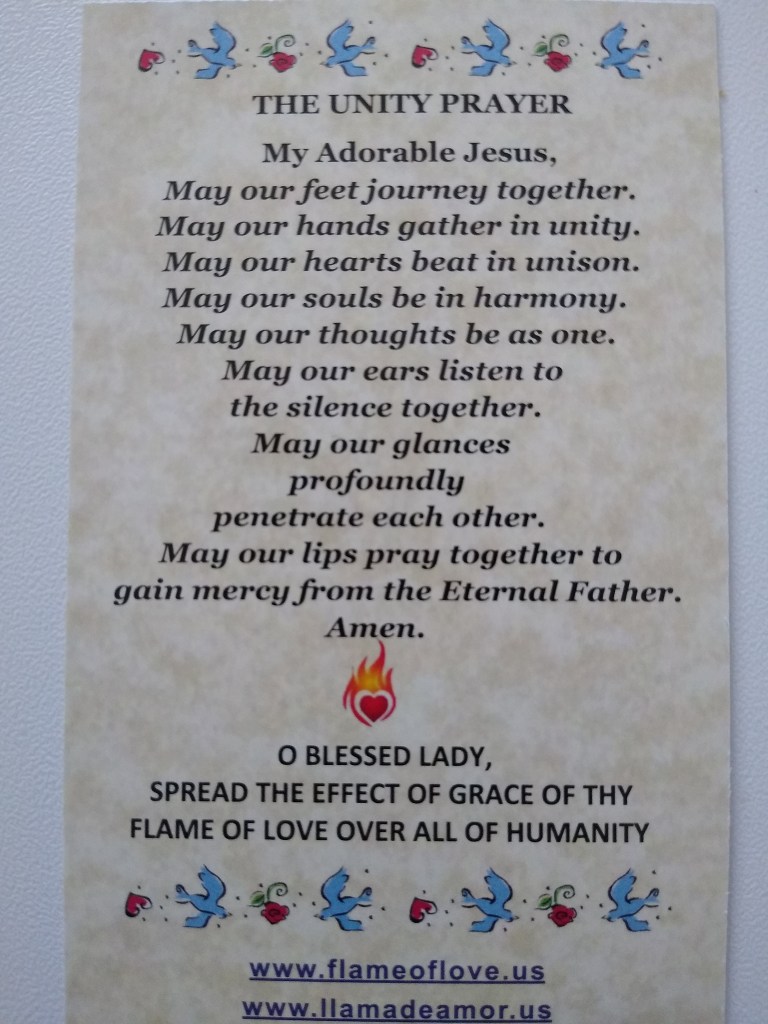
There is a viral Catholic prayer, The Unity Prayer by Elizabeth Kindelmann, that has caught fire in Catholic circles. The prayer itself is lovely (I will post it below) and the testimonies about it binding Satan’s influence over us probably true. That is the power of praying to Jesus. Being that these types of viral movements, in which numerous miracles are attributed to a specific prayer, fascinate me, I decided to read Kindelmann’s autobiography for more context. What a mistake that was! It wasn’t entirely a mistake. However, it is a tale of human suffering that can be very depressing to dwell on for any length of time. On the other hand, trust in God in the midst of suffering can be inspirational. There is both in the text, but unfortunately too much of the former for my mental health.

I stopped reading not too long after the words spoken to her by the Blessed Virgin Mary and Jesus turned the direction of “your priority is to remember that you are nothing.” Granted, this is a translation into English. In fact, it went from Hungarian to Spanish and then to English from the Spanish, so what I’m reading is twice removed from the original language. How difficult is that concept to translate from any language? I don’t know. I’m asking an honest question. Hungarian is a Uralic language and is therefore quite different from English or Spanish, but it still has a word that translates as “nothing.”

Why is this such a problem for me? On an emotional level, I struggle with nihilism. If there is no purpose to my or anyone else’s life on earth, I’d rather just off myself right now. Please don’t be alarmed by that, as I don’t believe my life is meaningless. I don’t buy that lie the evil one is selling. On a practical level, the pro-life movement, which is very important to the Catholic church, has as its core philosophy the value of all human life. Humans aren’t nothing. They matter. That’s why Catholic crusaders are willing to go to jail for protesting against abortion and euthanasia, as well as the maltreatment of humans. That’s why thousands of priests were killed by Nazis — they stood against the Nazi maltreatment of humans. How can they hold that philosophy while believing they themselves are nothing? Are they not as human and, therefore valuable, as the lives they’re fighting for? It’s a strange dichotomy you find all over the Christian world. I’m meaningless; I don’t have value, but I’m going to save the starving people in a refugee camp because somehow they have value despite being humans, too.

In a larger theological framework, there doesn’t seem much sense to God creating humans and sending his Son to die self-sacrificially for them if he regards them as nothing. What kind of capricious God would do that, and then advise these same humans when they are struggling through poverty and loneliness, as Kindelmann clearly was throughout her life, that their number one job was to remember that they are nothing? Her life as a poor woman and young widow had already taught her she didn’t have value. If she is writing that she is nothing, my guess is it’s coming from the worm in her brain implanted by maltreatment and not from God.

The Good Shepherd does not look pragmatically at his sheepfold and say, “Well, I have ninety-nine here. It would probably be better if I keep watch over these than go out and look for that one that left the fold. She left of her own free will. Her choice. She was warned about wolves. Besides, that’s one less mouth to feed, and who wants to give food to a poor female nobody loves? She’s nothing to us. Should we take a vote?” Those are not godly words. Jesus said he would leave the fold to find that one sheep that was lost. The sheep obviously being a metaphor for us, does the Good Shepherd strike you as a savior who would tell us we are nothing? That we don’t matter?

Humans want and need love. They want and need to know that they have value. They want to matter. It is no surprise to me that God built us chemically to produce pleasurable feelings when we do good for others. Doing good gives us a sense of purpose, a vocation. Yes, our chemical reactions can be tainted; there are sadists who instead feel pleasure when harming others. But we are appalled by that twisting of our God-given natures, condemning such people and their behavior, and rightfully so.

Maybe if I read the rest of her story, I would learn why it was important for her to remember she was nothing. I do not know because I’m not going to finish reading something that has already struck me as being false, closer to Zen Buddhism than Christianity. Instead, I’ll return to my fictional murder mysteries, where the sense of justice enacted in the end is predicated off human life mattering. If it didn’t, there would be little point to punishing murderers — which is, by the way, a biblical concept.

Have You Seen Any Christian Films Recently?

This was inspired by a YouTuber I like, Ready to Harvest, who frequently creates polls. I like him because he’s informational more than apologetic in nature. He describes Christian denominations and sects in a neutral tone. He rarely passes judgment. He’s an information and data collector, who then passes on what he’s collected for the benefit of his audience. I’m sure he has his own beliefs, but they aren’t the purpose of his channel. In a poll that just scrolled through my feed, he asked his audience if they had seen a Christian film in the last year, and there were various answering options.

The question gave me pause. Had I? Yes. And I had seen more than a few if it was a year from last May. For example, I watched Fr. Stu in the theater last spring. I also watched For Greater Glory at home. Those are movies with a clear intent of being Christian. Another that was Christian by default rather than intent was The Perfect Game. All were Catholic. All were based off of true stories. All left an impression on me, with The Perfect Game being my favorite. I’m pretty sure I wrote a blog post about that last one, as that kind of film is my personal crack. True. Inspirational. A story of the underdog prevailing. A sports theme. A dedicated priest, and kids with relentless faith in God. Yep. Make a film like that, and I will be there, and I will probably be wiping away the tears sliding down my cheeks.

I also watched some films that had a darker edge (For Greater Glory was heartbreaking and dark, but in a different way), such as Deliver Us From Evil, which is a horror movie based off the true story of a New York cop who becomes an exorcist. It didn’t get great reviews from horror fans because it was truly redemptive in its conclusion, the power of God overcoming evil. I’m not much for horror; I don’t like being terrified. I can’t stand jump scares, but this is a film worth seeing if you want to reinvigorate your belief in the spirit world. Of course, you have to believe that it’s a true story for that to happen. Belief is the sticky wicket, isn’t it?

Overall, I haven’t watched many movies this past year. I don’t have time for movies and shows, though I do admit sometimes I just want to recline on the couch on Saturday and do nothing but watch video entertainment. The problem is good films are difficult to find. There aren’t many stories like The Perfect Game out there. Most of the films I watched last year were Christian or inspirational in nature — true stories, though. There’s something about inspirational fiction that’s a bit too thick for me.

My original question stands: have you seen any Christian films recently? If yes, did you like them?

Being Wanted

The one argument coming from the pro-abortion crowd that repels me deeply is the one that says human life is valuable based on whether it’s wanted or not. When you grow up as the awkward, bullied reject, you understand deeply how much your presence is unwanted by the people around you. You can’t help but to exist, and on some level, you might believe that God wants you or you wouldn’t be here. But there is the sense that, given an amoral and lawless society, you would be deemed expendable and taken out.

I’ve heard it numerous times from the mouths of pro-abortion activists; when asked what the difference is between a human baby and a fetus that can be flushed or ripped violently from the womb, the answer is when the mother wants it, it’s a baby who needs protection. Otherwise, it’s a clump of cells with no personhood rights. These are virtually direct quotes from any number of abortion supporters.

I’ve discussed before that we humans are not logical creatures. This is, to be honest, the way God created us. He created us to be primarily emotional and instinctive; that is our first response to any given situation. Our instincts are intriguing, as they can be very basic, as in, I’m starving; I must have instant sugar, and they can conversely be very complex, instant decisions made based off years of inputs that work together in the background to aid us in this process. Logic is a secondary, learned skill, but it is solipsistic, processed through our filters. The conclusions are only as good as the premises, as well, so it’s possible to have flawless logic and still be completely wrong.

Most people have not learned logic and don’t understand cause and effect very deeply, especially when they want or don’t want something very badly. I don’t think I need to explain why the concept of only wanted people should be allowed personhood status will have a very bad logical outcome. But it’s going to be difficult to get around the initial instinct and emotional drive of a human that simply wants to escape consequences. They won’t understand the logic. They will turn it into a moralistic argument about the bad ethics of forcing a woman to go through an unwanted pregnancy. This is, of course, a false input, but most won’t perceive why. Even professors, who are supposed to be above-average, will refuse to accept that their conclusions are wrong.

You might recognize that I have an emotional response to the argument that only wanted people have value. Yes, it does make me emotional. Very emotional. My life experiences have taught me on an emotional level to be sensitive to the maltreatment of underdogs whom nobody likes. We know what happens when we devalue certain people; history has left humanity with those emotional wounds. And if you consider that a pre born child isn’t unwanted for any particular reason, it’s even more emotionally devastating. I was and am a scrawny, awkward person. It’s easy to dislike me. I’m obnoxious. But a mother who doesn’t have any personal grudges against a tiny being who has done nothing offensive because they haven’t had the chance to yet…just tears me up inside. It’s so cold. It’s so wrong, like the neighborhood boy who unaccountably pulls the wings off insects. He can; that’s the only reason. Well, she can, too, except those aren’t wings she’s ripping off a fly. They are the arms and legs of her own child.

This battle will never be won by pitting logic against emotions, anyway. What it really comes down is spiritual oppression. That is why you often find pro-abort protestors screaming obscenities and hail Satan. They do this ostensibly to rattle Christians, but it rather becomes an outpouring of their souls. These people are not emotional wrecks; they are spiritual wrecks.

Therefore, praying and preaching the gospel are the only answers. Too simple? I don’t care. My state’s a mess, with some of the most liberal abortion laws in the world. It is overwhelming to live here sometimes. What can I do? Sign a few petitions? Carry banners? Jesus is better. He is always the answer.

Lent Update

I gave up drinking alcohol two weeks ago. I often want to give up alcohol for Lent, but until this year, it hasn’t happened. It doesn’t help that people like me better when I drink because it helps me relax and get a few hours of sleep per night. I didn’t start immediately; it took me until the 26th to decide I no longer wanted to rely on an addictive substance to relax my central nervous system and block the negative thoughts that inevitably emerge when I lie awake most of each night. I’ve had chronic insomnia since childhood. I don’t know what causes it, but it isn’t simple. It doesn’t stem from anxiety or the spiral of negative thoughts themselves. I rarely feel the former, and the latter is a result of being awake for hours and not the cause of it.

The cause is probably related to an overstimulated nervous system, which is why ordinary fixes for insomnia don’t help, e.g., spending time in nature, exercising intensely, etc. Both are far too stimulating–although, the last time I spent several hours in Carlsbad Caverns, I slept an unprecedented nine hours straight. Walking slowly through a dark cave might actually be the nature and exercise level I need! That not being a regular option, however, means that alcohol is the most useful medicine I have at my disposal. But I’d still rather not be addicted to it.

There is a purpose to giving up our worldly addictions during Lent; for a start, we simply have too much of everything in our modern day. Suffering can bring us closer to God. That is the goal, anyway. We are preparing our hearts for Jesus and the suffering he endured for our sake. It’s supposed to bring about the renewal of our hearts as is promised in the Advent season, which starts off the church calendar. Did you know that the church calendar ends in November instead of December, as the solar calendar does? Advent brings joy because it’s a reminder that God sent his son to be savior of the world. But Lent brings sorrow because Jesus and his act on the cross remind us that we are desperate sinners in need of a savior. Lent is a time to prepare our hearts for Him.

Has depriving myself of alcohol helped to prepare my heart? In the ironic sense that I’ve suffered from depression and excruciatingly negative thoughts, sure. I know that underneath the veil of alcohol and my endless pursuits lies hopelessness. I can’t see my way out of that hopelessness, not on my own. I can only cover it up. Maybe I should have given up writing and music in this season, too. I gave up writing once–it was the longest Lent season I ever experienced. I prayed that God would show me whether I should continue pursuing that dream. I have a difficult time discerning God’s voice. I heard no clear answer, and so eventually carried on with it, albeit, certainly not as a priority, which explains why I have published only four books since 2013. Again, this Lent I’m asking God for answers. But I already know that unless he speaks in a loud voice, I won’t hear it. Meanwhile, I know what sin is. God makes that clear enough. And so I have a clear path forward regardless. We all do; we know what sin is. None of us has an excuse.

How to Evangelize to Catholics

Don’t. That’s the simplest possible answer. This subject came up the other night at the adult education class held in the library of my parish. We were discussing the story of Clovis, a Frankish king, who famously promised God that he would convert to his wife’s Catholic faith if he was victorious in battle against the Alemanni army. God granted him this petition, and Clovis followed through by being baptized. In response, several thousand of his troops followed him in baptism.

One of the class’s skeptics asked how real the conversions were for these several thousand men. Did they understand Christianity? Were they given any kind of catechesis? These are worthy questions, as even Billy Graham stated that only a certain percentage of people who went to the “altar” to be saved at his revivals retained the faith they’d experienced that day. There is a shared social contagion at such events, and if you add in the loyal nature of military men to their leaders, the social contagion might very well be even stronger than the average group emotional response.

The day before, I had watched (through a YouTube prompt) a Ray Comfort video, in which he preaches the gospel to Catholics and, in fact, I believe the video is called How to Evangelize to Catholics. I brought this up and got a few snorts of derision from the room full of cradle Catholics. But I gave them the sad truth: the Catholics whom Ray Comfort had evangelized seemed to know nothing of their faith. They couldn’t even tell him the meaning of the word Gospel. To this ignorant Catholic couple, the Gospel was something read at Mass. While this is true–the reading of one of the four testaments to the gospel happens at every Mass–the word means “good news.” This good news, obviously, refers to Christ coming to the world and laying down his life for mankind, and subsequently defeating death by rising again.

“Many Catholics are ignorant of their faith, even with ‘good catechesis’,” I said, as that was my only point in bringing up the video.

Several hands shot up around the room. At least three of these cradle Catholics had experienced the same kind of ignorance before they’d made the effort to defeat it through education they’d chosen to pursue of their own free will. While I’ve long honored the notion of catechism, as its aim is to ensure that young people (or old people) understand what it is they are saying “yes” to at their confirmation, too often it is done simply because parents or grandparents are putting the pressure on. I would guess that the vast majority of Catholic young people don’t attend religious education classes because they want to; they are going because their families expect them to. This leads to a situation where whatever education gained is lost through disinterest and no further seeking out of knowledge…until faced with a charismatic Protestant force like Ray Comfort.

On the other hand, it must be remembered that Protestants and Catholics speak a different language, and I don’t mean Latin vs English. I mean that they understand the gospel in a different way. You don’t have to understand that the word “gospel” is the good news of Christ coming to earth to save mankind; you simply have to understand that Christ did this. And I’m still willing to bet that most Catholics do indeed understand this. It’s hard to tell what Catholics do or don’t understand due to the fact that the Catholic spirit is so very different from the Protestant spirit. Protestants will wrangle over doctrine and argue every last syllable in their Bibles; most Catholics won’t do this. They are taught to respect their church authorities, and even if they do at some point decide to engage in their own studies of the Bible, learning about the apologists, Greek, Hebrew, and Aramaic (e.g., the students in this adult education class), they will most likely still not argue with you. Therefore, when faced with a man such as Ray Comfort who has his own script down to a T, Catholics might appear ignorant and in need of true salvation. The way he talks to people reminds me of a lawyer in court who wants specific answers so that he can then continue with his script. In a courtroom, this is to subvert actual truth from emerging because it might interfere with the goal (conviction or acquittal). That might not be Mr. Comfort’s goal, but it is the inevitable result. Nobody watching the video will ever know what those Catholics actually know because they aren’t allowed to speak using their own language and understanding of Christianity. They are only allowed to answer Ray’s pointed questions.

The responses in the comments section revealed what Protestants believe about Catholics. I do shared ministry with Catholics, and it’s as if they don’t even open their Bibles… The comments like this are rife under Comfort’s videos when they are of his evangelizing Catholics. Of course, it might never occur to these people that Catholics are involved in ministries because they actually take their faith very seriously, but it’s a faith invested in ministry instead of arguments. And they might very well be trying to keep the peace with the Protestants they work alongside. They also might very well might be telling you in a nonconfrontational way to leave them alone. Truth be told, it’s actually galling to be literally living out your Christianity in the world and then to have other Christians try to evangelize you as if you weren’t.

That’s a real gripe, though, isn’t it–that Protestants believe they own the term “Christian”? It’s gotten to the point where Catholics won’t use the term at all, as they might come across as being Protestant instead of Catholic. The other week, we had a confirmation retreat in our parish hall. One of our volunteers, who has a learning disability but is always curious and earnest, reported to me that one of the young teenage students at the confirmation retreat had written on the question board: “What is the difference between a Catholic and a Christian?”

This volunteer asked me, “So what is the difference, she who knows everything?” (Yes, he does call me that. I’m good at fooling people.)

However, I did have an answer for him: “None. There is no difference. Catholics are the original Christians.” You might argue with that, and I encourage you to go right ahead. At the very least, I hope you’ll admit that Catholics called themselves Christians long, long before the Protestant Reformation came around.

I stick to my original answer above. It’s arrogance to believe that Catholics aren’t Christians and need to be evangelized. So, if you were looking for the simple answer to that question, you’ve come to the wrong place. As with any group of people who grow up in a traditional faith, there will be those who will reject their faith when they are at an age of accountability. It’s the reality of the seeds of the gospel scattered on different soils and landing places. Some fall on rocky ground. Some, surprisingly, lay fallow for years before the soil is ready for a little bud to emerge from the dirt. For the soil that is simply lying fallow, God will provide the means for its new growth. You might very well be the means for another person, whether they grew up Lutheran, Catholic, Quaker, or Southern Baptist, or even outside the church entirely. But I would encourage you not to assume without any knowledge that Catholics aren’t Christians and need you to bring them the Gospel. After all, they do indeed hear it weekly at Mass, and I don’t just mean the reading from one of the four testaments about Jesus. I mean they hear the entire gospel message spoken through the liturgy at every Mass.

Always Seeking Goodness

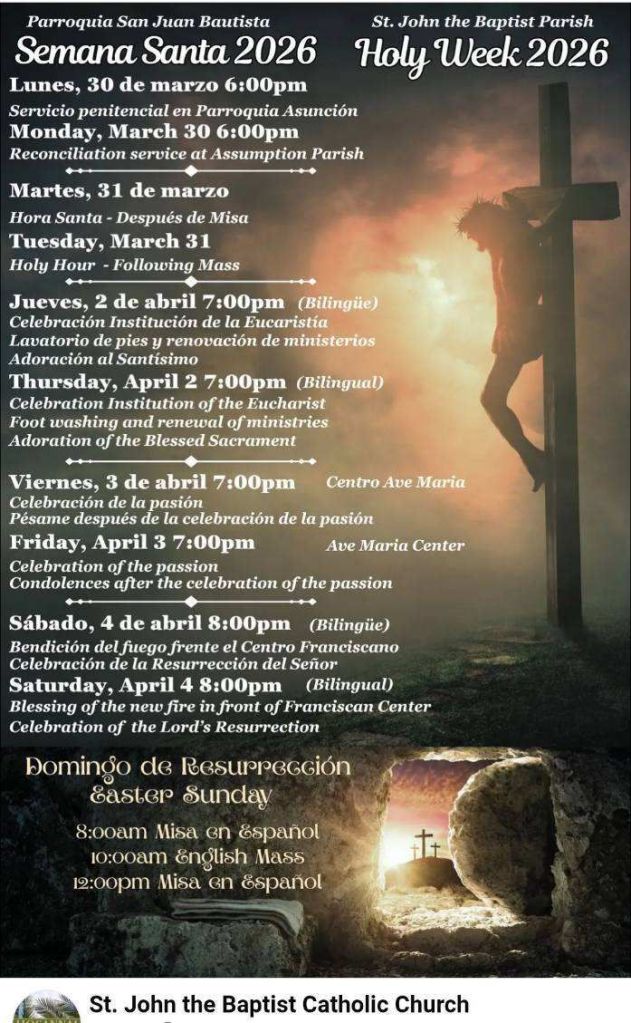
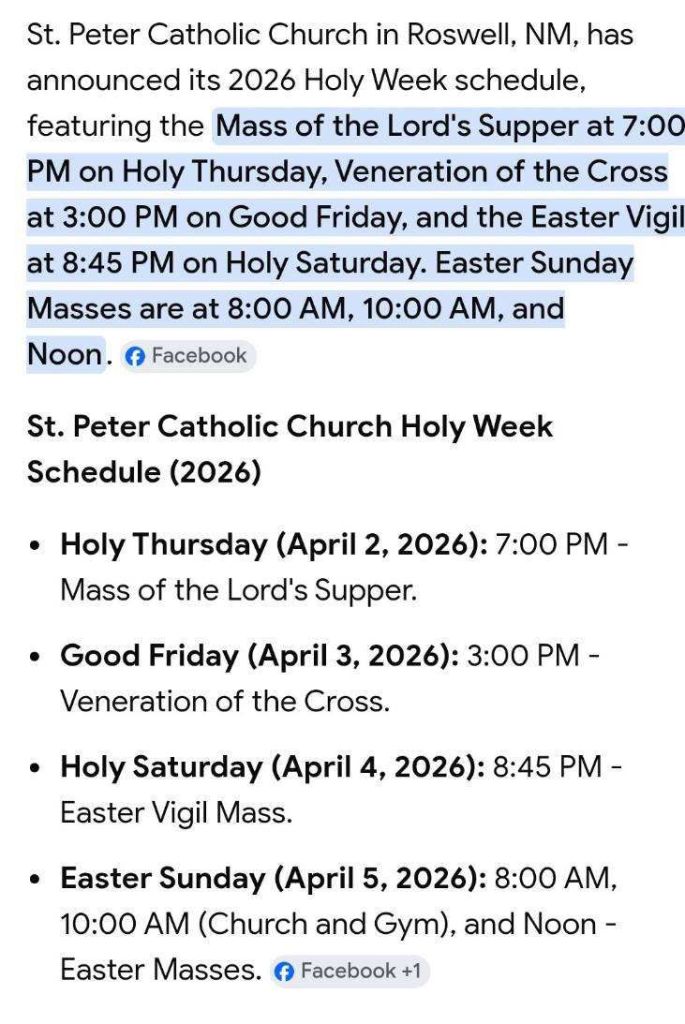
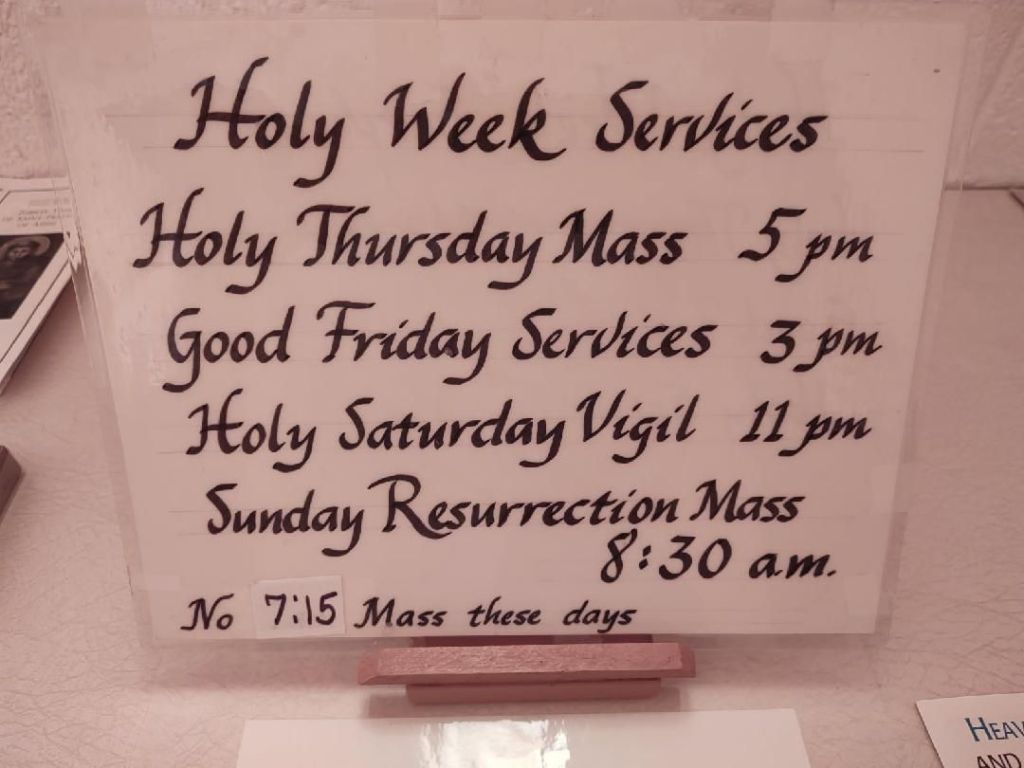
I’ve been attending the 8 a.m. Mass at another parish in town; the earliest Mass at my parish is 9. When you are an early waker, as I am, you tend to get impatient before 9 a.m. Mass. I wait until after Mass to drink my coffee and eat my breakfast. This is certainly not required by the church; I simply prefer it. Also, there is the ever-present problem of being a parish secretary who is already at my parish forty-plus hours a week. Sometimes, I need a break. Maybe next Sunday, I will go to 7:15 a.m. at the Poor Clare’s.

What can I do before Mass if I wait until 9? Read? I suppose. Recently, I discovered an author, Veronica Heley, whose books I would read any time because they are my special crack: they are cozy mysteries that don’t shy away from the darkness of evil. I’m partial to mysteries; most are cerebral and character-focused and use detection to bring about justice. Yet so many have sleazy main characters who are essentially nihilists hopping into bed with whomever, who don’t understand their own drive for godly justice. Heley’s books, while not having an American preachy quality (the author is English), feature protags who aren’t nihilists, albeit they aren’t perfect, either. The author clearly has Christian faith. That was a long diatribe to say that most books I have no desire to read before Mass. So, yes, the earlier the Mass, the better — before I’m distracted by worldly thoughts and cares. By the way, when I say they are crack, I mean it. I read the first four in her Abbot series back to back in about a week’s time. Then I gave myself a break. I will come back to them soon and read more.

Now it’s noon, and I’ve been to Mass and eaten and had my coffee and….watched a Lawrence Welk documentary that Color Storm linked to in my previous post’s comments. It’s an A&E Biography, and it’s worth an hour of your time (less, if you pay for YouTube and don’t have to watch the ads.) Aside from British mysteries and Mexican music, I have a general affinity for all accordion music except perhaps Tango. Tango* is just too pretentious for me. I’m like Lawrence Welk: I like to keep things light, goofy, and joyful. Life is full of darkness and evil with war and rumors of war — the evil one is always crouching at the door. But you know what? Goodness is also part of reality. It is True reality with a capital T, as that is what God represents. If anything, it is the evil one who usurped reality and turned it into a dark and terrible place, right outside the Garden where weeds consume healthy plants and blot out the fruit. And we humans fall for it. We’ve been falling for this illusory reality from the beginning. Yes, of course, I understand that weeds are very real in our world, but the purer reality is that when a garden is nurtured properly, it will produce fruit. And that is a true metaphor, both for inside our souls and outside in the physical world we must currently live in.

Lawrence Welk represents goodness to me, as far as humans can. He had a very public image and no real controversies that I’m aware of. Even his widow said he was an honest man of integrity, and she was the one who had to suffer for his music career that kept him away from his family for great lengths of time. She could have had mixed feelings or bitterness towards him, done a “tell-all, nitty-gritty, shocking bio” about living with a musician, but she did not. Yes, I’m obsessed with the accordion and want to make the case that the accordion is part and parcel with Welk’s desire for goodness. That’s not it, though, is it? If you want to like Mr. Welk, watch the biography, but please be aware that the A&E producers completely left out the reason for Welk’s staunchness about who he was and what his show would be pushing. That doesn’t surprise me — does it you? Lawrence Welk was a very devout Catholic Christian, who grew up in a German settlement of Catholic Christians. The ever-popular Lennon sisters were also from a devout Catholic Christian family. The intriguing part about the Lennon sisters is they are quintessentially American, with a genetic makeup of German, Irish, and Mexican. I understand that in many cases wholesomeness is just a put-on for the camera, especially if it comes from Hollywood. This show was not Hollywood, though. It was Lawrence Welk to a T. He wouldn’t do the show the way the network wanted to, and by God’s grace the network capitulated to him.

*Ja ja ja, sorry, I didn’t mean to imply that Tango is dark and evil. I don’t like it because it’s too serious for my tastes. The accordion is romantic and happy and magical to me, and I play it with all seriousness, but I want it to remain light to my soul…like bubbles in wine.