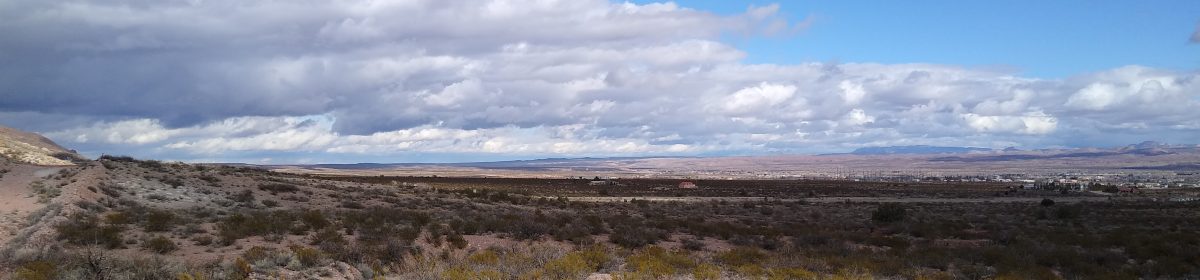
It’s cold these days; the tree across the street is fully red. Most trees in New Mexico only blaze a fiery yellow for a short duration, and then fall is over. It’s a phenomenon brought on by the shortness of the season here. It commonly goes from hot to cold in an instant, which doesn’t allow for the slow turning of the leaves. However, here in Roswell, there are a handful of trees around the city that turn a deep red, and one is right across the street from me. It’s beautiful.
I have trouble dragging myself out of bed when it’s cold, though. I have trouble moving at all when it’s cold. I think I was meant to hibernate in the winter, despite my supposed cold-adapted genetics. My inability to pack on the pounds defies this idea of cold adaption. I suppose this is my excuse for turning into a lazy blob this week. Instead of getting up at six, I’ve been sleeping in until seven. Instead of doing a workout immediately, I’ve lazily made breakfast for my son and then sat on the couch until it was time to take him to school. I’ve been watching YouTube videos.
This morning, I was watching videos called Los Rancheritos de Sinaloa. I watched a matanza, though it skipped from the adorable little piggy alive and well and went to a tutorial on how to make chicharrones y carnitas, and it was just getting to the best part, the assembly of chicharron tacos, when my son insisted we had to leave or he would be late for school. Such has been my week, with the greatest moments existing as deep-fried pork fat tacos.
I’m on the Sinaloense algorithm on YouTube. This is because my favorite Mexican singers hail from Sinaloa, and I like to listen to interviews with them if available — it improves my Spanish listening skills. They are the singers who have full brass bands to accompany them. Brass bands were introduced to Mexico in general in the mid-nineteenth century, but the genre known as banda today originated in Sinaloa. It’s no surprise, then, that the best singers also hail from Sinaloa. These include but aren’t limited to Julio Preciado, Pancho Barraza, Valentín Elizalde (not from Sinaloa, but moved there to part of the music scene…and died young as part of the music scene*), and José Angel Ledezma Quintero, aka El Coyote. I think I’ve said before that El Coyote is my favorite singer; there is a depth and beauty to his style que me pone a llorar. Well, I suppose that’s an exaggeration. I don’t cry when listening to my favorite music. But his voice makes my robot soul feel deep emotions, and that’s not an exaggeration.
I suspect this post had a point in the beginning somewhere, when I first started writing it. Oh, yes, I think it was my laziness and propensity to fall for YouTube algorithms and watch videos of life on the ranch in Sinaloa. What strikes me is how New Mexico culture really isn’t that different from that of Sinaloa. We are a ranching and farm state. People are unpretentious and love their little “Shire” in the Southwest of the United States. In fact, people with roots in New Mexico are loath to leave it. I get the idea people from Sinaloa are the same way: they love their little corner of the world.
The food isn’t that different, either, despite that Sinaloa is a coastal region. But then, that’s the case with much of Mexico and New Mexico; we are the far northern region that used to belong to Mexico. They say colache. We say calabacitas. Actually, they use the term calabacitas, too, for various dishes. I noticed that in one Sinaloense rancho video, the mamá called the dish she was making colache, but it has the same ingredients of the New Mexican dish we call calabacitas. It used to be you could get calabacitas in New Mexican restaurants, but I haven’t seen it for a long time. I live in Roswell, though. I suppose it’s still on menus in Albuquerque and Santa Fe. It’s an end-of-summer or early fall dish meant to use up all that leftover summer garden squash, but I think it’s not too late in the fall to get away with making it. I will simply have to buy whatever the store offers for summer squash. My family loves the dish, which is composed of chopped squash, corn, onions, garlic, and usually green chile in the New Mexican dish, though I believe the Sinaloense mamá chopped a single jalapeño for her colache. It’s cooked in butter or lard, depending on what you prefer, and can have other ingredients such as tomatoes, though I prefer it just as I described above.
*I love the beauty of the land I see in Sinaloa, but it also has its dark side. Valentín Elizalde died young because he was murdered. Many other singers have been murdered or have had attempts on their lives. The people on their ranches seem happy; I suppose the violence doesn’t always touch people out on their farms. And, honestly, I don’t know that Sinaloa is the highest crime region in Mexico. They do harbor their own giant cartel, which is going to taint the culture at least a little. But again, is that different from where I live? No, it is not. Roswell is a sleepy agricultural town with one of the highest violent crime rates per capita of anywhere in the United States due to being on the drug trafficking route. It doesn’t affect me — not much. I’m happy in my little house in a decent neighborhood, but the reality of violence all over New Mexico can’t be denied.
And because I’ve been habitually providing you with videos, I’ll post one of Pancho Barraza. He is a great singer, loads of the drama I like, and a total goofball in some of his videos. He dances like Napoleon Dynamite and the Happy Hands Club in one, though I happen to like the below song better.
 Jill Domschot
I love me some pork rinds, but it’s hard to make them flavorful unless it’s part of a larger dish. I never thought to make them homemade–I just watched a few recipes on Youtube. Thanks a lot, Jill…something else I need to do on vacation next week. 🙂
LikeLiked by 1 person
Ha ha ha, sorry. You could make it a Thanksgiving tradition. They’re actually a satisfying snack, I think because they’re pure fat and protein.
LikeLike
I’m already making hot chocolate stones for T-day, but honestly, pork rinds feel more appropriate. There’s too many desserts on Thanksgiving anyways.
LikeLiked by 1 person