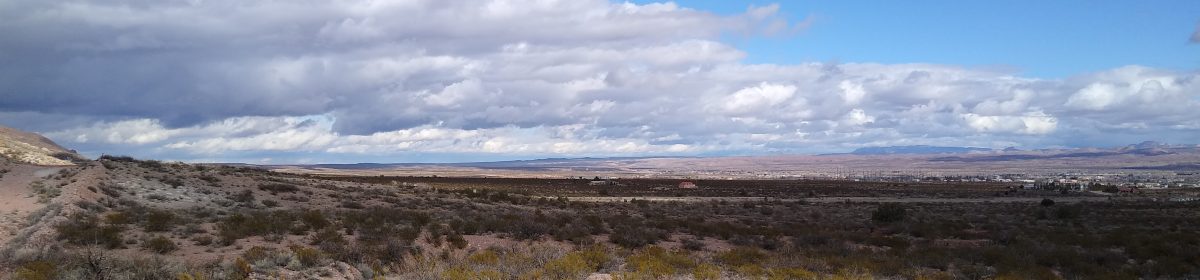
This blog is titled Joy in the Southwest. There is an entanglement of peace and joy; the two go together. And where is this elusive entanglement to be found, you ask? It’s found in the inheritance of what our forebears have passed down to us. For example, look at the image above. I live in New Mexico because my great-greats passed on a legacy of rippling clouds over a desert landscape that rolls down into a lush River Valley. I live here because it’s my inheritance.
My forebears–my maternal grandmother specifically–passed down Christianity to me, as well. She passed it down to my mother, who passed it down to me. My father, of course, also found Christ and passed his faith along, but the story of the desert is centered around my maternal ancestors, who were enamored with the beauty of New Mexico. There are, in fact, reams of photographs from a great-great grandfather who was an early Wild West photographer.
It is funny, but my phone just rang, and after I was done talking, I glanced at the news articles on my phone and spotted this title: El ‘boom’ de la espiritualidad laica: la nueva religión es creer en uno mismo. In other words, the new secular religious fad is to believe in oneself. That is exactly the opposite of what I’ve found to be fulfilling in life. Why would I believe in myself? That is not a religion. It’s extreme myopia. It centers the universe around a single person instead of a history, a chain of people that has led to a distinct person, and a creator who brought it all about.
Some might tell me I need to believe in myself a little more. As a daughter and granddaughter to all these forebears who lived and died before me and left me with a legacy, why not be confident in that? Yes, I should be confident in that. There is a certain limited sense in which I have to acknowledge that God has given me gifts, some of which were brought about due to heredity, and I should stand strong in those. All this shillyshallying around with feeling incapable of accomplishing even those things I’ve worked so hard at over the years is ridiculous and needs to stop. But believing in oneself is not an end unto itself. It’s not a “secular religion.”
I don’t live on my inheritance property any longer. Lately, I’ve realized I might not for years to come. This is because I was able to get a job that will keep us in the land of aliens, instead. While still New Mexico, it is a far cry from the peaceful enclave of the River Valley.
I visited my home last weekend, though. My true home. Well, perhaps, not my true home as depicted in Christian gospel songs that wax poetic about heaven — my home in the Southwest that was passed along to me by my forebears. I love to visit. There are many dark and disappointing aspects about the town where my home is located, and yet I can’t stop loving its beauty and strangeness. Walking in the desert, at that high elevation, looking out over the landscape, my heart is filled with joy. Of course, I’m generally walking with my parents or one of my daughters. There is, no doubt, at least one dog with us, who is loping after jackrabbits and splashing through the warm spring water that feeds the pond. Can this be a piece of what heaven looks like? If not, it surely is an image of worldly joy. Dogs, family, the beautiful desert.
I’m sure you know I didn’t grow up here in the Southwest, but I fell in love with it as soon as I first laid eyes on the landscape. But it’s also the history here that ties me to this place, both my own family history and the much older history of the peoples who settled this land. There were the native pueblo peoples, and then there were the Spanish, who brought with them Christianity.
Along with a walk in the desert with my parents and their dog last weekend, I attended Mass at San Miguel Mission. San Miguel Mission is one of the oldest churches in the United States; it is also one of the most beautiful. However, it doesn’t get the tourist traffic and fame that the old churches in Santa Fe and Albuquerque get. Instead, it’s a quiet gem tucked into the heart of central New Mexico.
On our first visit to New Mexico, many years ago, we did play the tourists and slip inside San Miguel to study the architecture. Well, I can’t say I was there to study the architecture. Yes, the history of the church is fascinating, but I was instead interested in what the church felt like inside. Yes, felt. This is a building that has bodies of long-ago people buried beneath it — it has been a refuge for the living and the dead for roughly 500 years. Buildings have personalities (for lack of a better word). They contain their histories and soak up the tangible and intangible elements in their walls.
I was captured by the beauty of the church, yes, assuredly. The main church is a small building with the muted colors of the desert on its walls and in the old woodwork. It also has the gentle colors of the Mediterranean in the statuary, while the stained glass boasts the vibrant church tone of royal blue. But more than that, I was captured by the feeling of peace inside its walls. I wanted to sit in a pew or kneel on the bench and stay there forever. Peace is not a feeling I was or am generally used to experiencing — I generally run off of agitated energy stores from caffeine, exercise, vitamins, and an average of three hours of sleep a night. I wanted whatever was present in that church. It was something, obviously intangible, that I had never felt in a Protestant church building.
I didn’t know at that time that all Catholic churches feel that way inside. I hadn’t spent too much time in Catholic churches in my young adulthood. In my youth, I had several Catholic friends, and I went to Mass with them once, but I hardly remember the building and what it felt like inside. I only remember being devastated that they hadn’t explained to me beforehand that I couldn’t partake of the communion as I could in the Protestant church my parents attended. When I became a Lutheran briefly before going full Catholic (Lutherans are often described as “Catholic Lite”), I remembered and understood … but that was many years later.
Why do Catholic churches contain a perpetual feeling of peace? One of my daughters asked me that; she apparently has slipped in and sat in a handful of Catholic churches and made note of it. Devoid of congregants gathering, Protestant churches feel vacuous. It is a very different reality. I spent some time as a church janitor in a Protestant church, and I loved it because it was empty. I could sing and fill the space and think deep thoughts, or not so deep thoughts, and get my work done with zero interruptions. But “peaceful” would not be a word I would use to describe the building. Empty and echoing — yes, those are the correct adjectives.
At a Catholic church, the sanctuary building is generally unlocked during the daytime, and many people are coming and going. There are daily Masses and Adoration prayers at various times. So, for a start, they simply aren’t empty as often as Protestant churches are. But it’s more than that: if you ever have the opportunity to sit for a few minutes in a Catholic church, you will notice there is a candle lit almost perpetually during the liturgical year. That candle signifies the presence of Christ in the small tabernacle, set into a niche on the back wall behind the altar. Through the Eucharist, Christ is present in a Catholic church almost all the time. That’s what I attribute the difference to — the constant presence of Christ.
As Christians, we should all have that constant peace inside our bodies, which are the living tabernacles of Christ. And in a sense, we all do. Even I do, with my agitated insomnia and caffeinated mind. The problem with being human — oh, and there are many more than one — is that we have our corporeal bodies there, ready to snuff out the peace of Christ in us. That is a primary reason why I look to my inheritance for a peaceful joyfulness. My people and my God have passed along so much to me, and I cling to that like a drowning person in a shipwreck. It gives my life purpose and meaning. And, also, of course, I go to Mass. While Christianity in general was a family legacy, Catholicism wasn’t. It will be now, though. It’s a legacy that I will be leaving for my descendants who come after me, who might inquire Why did our great-great grandmother convert? Perhaps I’ll even write a book about it.
 Jill Domschot
Lovely post, Jill! I’ve also found no peace in the idea of “believing in myself.” I’m finite, limited, imperfect, and also unable to control the vast majority of the world around me.
Your post reminds me of how it says in Exodus 20:12, “Honor your father and your mother, that your days may be long in the land that the LORD your God is giving you.” We need to be tied to our ancestors, we need that family legacy, because it helps us to be part of something much greater then ourselves. A big problem in our world today is that people are not rooted, not to the past, not to their families, not to tradition, not to the land, and that has a huge spiritual impact on us.
LikeLiked by 1 person
Yes, connection is very important, I think. That has been lost in our modern independence.
LikeLike
How does one search your site? I was looking for that post you wrote about anti-heroes but can’t figure out how to search.
LikeLiked by 1 person
I’m not sure. I guess I need to put that widget on again (I used to have a search this site). But the crazy thing is I don’t remember writing an anti-hero post. But I probably did if you remember it.
LikeLiked by 1 person
This isn’t related to your post, but I noticed today that my published books are right before your published books in my library.
LikeLiked by 1 person
You come first just because you have an “I” after the “D”! So not fair. Heh. Just kidding.
LikeLike
It’s conspiracy involving Italian surname conventions and the alphabet, or something.
I recently bought a bunch of bookcases and was moving the library over to them last night. Not sure why I didn’t notice it before.
LikeLiked by 1 person
You should come to New Mexico, where all the “D” names get knocked to the middle of the alphabet because there are so many Chavez surnames.
LikeLiked by 1 person
You describe NM so well.
I recall visiting Taos and Jemez hot springs and lots of other places around Santa Fe and I miss that Southwest landscape.
[[…]It was something, obviously intangible, that I had never felt in a Protestant church building.
I didn’t know at that time that all Catholic churches feel that way inside.] Interesting.
I usually get a creepy feeling in those dusty old Catholic cathedrals, and the cathedrals in Central America where my wife is from are, for me, morbid to the point of horror. But humble Southwestern chapels are another thing completely, so I disagree that all Catholic churches feel that way. Hey, speaking of popery, I loved your “Essay on Criticism” post and reblogged it. Hope you don’t mind.
LikeLiked by 1 person
No, I don’t mind anyone reblogging my blogs. I have not been in any Catholic churches in Central America, only the US and Mexico. But we don’t just have humble chapels here. The parish I attend is midsized, and the Juarense church across the border is definitely a cathedral. They vary.
LikeLiked by 1 person